Terry & Tub is reader-funded. Every buy button here goes to Amazon and earns us a commission at no extra cost to you. Brands we cannot earn from are reviewed anyway when they are the right answer, with a citation instead of a buy button. Full disclosure.
Egyptian cotton is worth paying for when the listing also tells you the staple length and the weight -- extra-long-staple Egyptian cotton genuinely lints less, pills less and thins more slowly than ordinary cotton. It is not worth paying for when "Egyptian cotton" is the only specification given, because the phrase is not legally protected and says nothing about grade, weight or construction.
The claim people have absorbed is that Egyptian cotton is the best cotton. The accurate version is narrower and more useful: cotton grown in the Nile valley tends to produce longer fibers, longer fibers spin into stronger and smoother yarn, and stronger smoother yarn makes a towel that ages better.
Every step of that is true. The problem is the last mile. "Egyptian cotton" on a label is a geographic claim, not a quality grade, and nothing stops a manufacturer blending a small proportion of Egyptian cotton into a towel and printing the phrase on the band.
What staple length actually does
Staple length is the length of the individual cotton fiber. It is the one thing in a towel that cannot be faked by construction, and it decides three outcomes you will notice.
- Linting. Short fibers have more loose ends per inch of yarn, and those ends shed. A long-staple towel stops linting after a few washes; a short-staple towel never quite does.
- Pilling and thinning. Loose ends tangle into pills, and pills wear through. Long-staple yarn has fewer ends to tangle.
- Softening versus degrading. A long-staple towel gets softer with washing as the yarn relaxes. A short-staple towel gets thinner with washing, which feels like softening for about six months and then does not.
| Band | Fiber length | Names you will see |
|---|---|---|
| Short staple | Under about 1 1/8 in | "100% cotton", "premium cotton" |
| Long staple | About 1 1/8 to 1 3/8 in | Turkish, Egyptian, combed cotton |
| Extra-long staple | Over about 1 3/8 in | Supima, Pima, Giza Egyptian, Aegean |
Note what is in the middle band. Turkish cotton is long-staple too, and it typically costs less than Egyptian for the same staple class. That is the central fact this whole question turns on, and the Turkish versus Egyptian comparison goes through it in detail.
When Egyptian cotton is worth it
- When you keep towels a long time. The whole advantage of long fiber shows up in years three to eight. If you replace towels every three years, you will never collect on it.
- When linting matters to you. On dark bathrobes, glass, or anyone with long hair, a low-lint towel is a genuine daily improvement.
- When the towel is also light enough to dry. Egyptian cotton in a 900 GSM towel in an unventilated bathroom will be destroyed by mildew long before the fiber has a chance to prove itself.
When it is not worth it
- When it is the only spec on the listing. No weight, no staple class, no hem construction: you are paying for a word.
- When a Turkish-cotton towel with a published GSM costs less. Same staple band, verifiable number, less money.
- In a rental or a guest bathroom. Those towels fail from bleach cycles and stains, not from fiber fatigue. What to buy for a short let instead.
- When the towel is very heavy. Weight undoes the benefit. Dry time is the thing that ends towels. The weight bands in full.
The three we would buy
One genuine Egyptian-cotton towel, one cheaper long-staple alternative, and one extra-long-staple towel that shows what the money should buy.
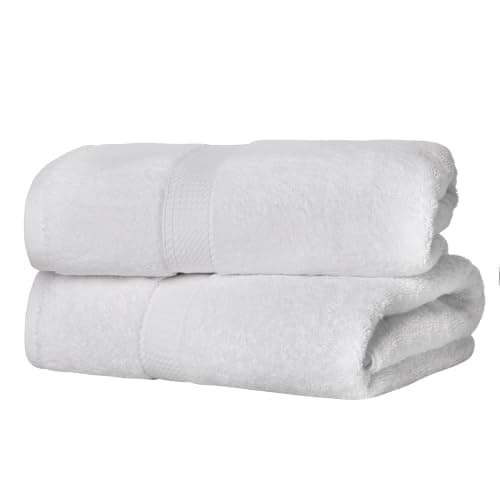
Superior Egyptian Cotton Plush is the plainly labeled option: Egyptian cotton pile at 30 x 55 in with a braided border and a hanging loop, OEKO-TEX certified. A braided border is a woven edge rather than a folded hem, and woven edges fray later. It does not publish a GSM and calls itself heavyweight, which is the gap -- and heavyweight Egyptian cotton is the slowest-drying combination in this category.
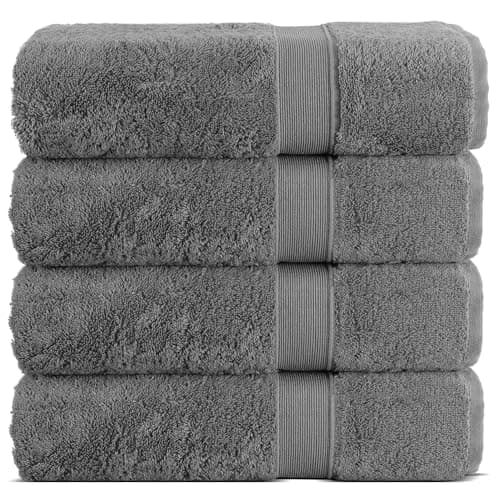
Chakir Turkish Linens Hotel & Spa is the comparison that matters: long-staple Turkish cotton at a published 550-600 GSM, built to hotel laundry spec, for less money. If you cannot articulate what the Egyptian premium is buying you over this towel, it is not buying you anything.
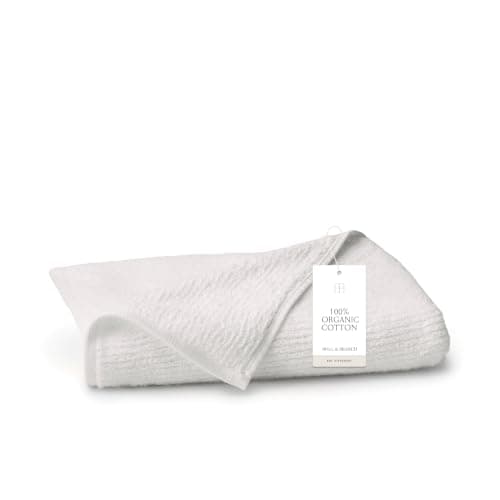
Boll & Branch Turkish Ribbed is what a real extra-long-staple premium looks like: organic ELS Aegean cotton in a channeled ribbed weave that lets the towel dry. It also does not publish a weight, which we hold against it, but the fiber and the weave are the two things that decide how a towel ages.
One honest Egyptian-cotton towel, the cheaper long-staple towel it has to beat, and an extra-long-staple towel that spends the premium on fiber rather than weight.
Egyptian cotton, plainly labeled
Superior Egyptian Cotton Plush Bath Towel Set
A heavyweight Egyptian-cotton terry towel with a braided border and a hanging loop -- the dense, plush end of long-staple cotton, sold without a story attached.
#ad How we are funded · Price as of November 3, 2026
Hotel feel at a hotel-supply price
Chakir Turkish Linens Hotel & Spa Bath Towel
A 550-600 GSM long-staple Turkish cotton towel built to the hotel-and-spa spec, which is exactly the crisp, medium-weight towel most people are actually trying to buy.
Luxury that bought fiber, not weight
Boll & Branch Turkish Ribbed Bath Towel
Extra-long-staple organic Aegean Turkish cotton in a channeled ribbed weave -- a luxury brand that spent the money on fiber and airflow instead of grams.
#ad How we are funded · Price as of November 3, 2026
How to read an Egyptian cotton listing in sixty seconds
- Search the listing for "staple". If the word does not appear, treat the Egyptian claim as decorative.
- Look for a GSM against the size you are buying. No number means no comparison is possible.
- Check the phrasing: "100% Egyptian cotton" is a stronger claim than "made with Egyptian cotton".
- Check the hem. A braided or woven border beats a folded-and-stitched hem on any cotton.
- Check the weight against your bathroom's airflow before you check anything else about the fiber.
If that process leaves you with nothing, buy a long-staple Turkish towel with a published weight and spend the difference on a second set. The cotton types guide has the full comparison of every name you will meet.
Linting is the specific problem people most often buy Egyptian cotton to solve, and it is worth knowing that weave does as much of that work as fiber does. The low-lint picks set out both halves.
Frequently asked questions
Are Egyptian cotton towels worth it?
Only when the listing backs the claim up with a staple class and a weight. Extra-long-staple Egyptian cotton genuinely lints less and thins more slowly than ordinary cotton, but the phrase "Egyptian cotton" alone is a geographic claim rather than a quality grade.
Are Egyptian cotton towels better than Turkish?
Not reliably. Both are long-staple cottons, and Turkish towels are typically cheaper for the same staple class and more likely to publish a GSM. Egyptian cotton wins when it is specifically extra-long-staple and the towel is light enough to dry properly.
Are Egyptian cotton towels lint free?
No towel is lint free, but genuine long-staple Egyptian cotton stops linting after a few washes, where short-staple cotton keeps shedding. If a towel labeled Egyptian cotton is still linting after ten washes, the Egyptian content is probably a minority of the blend.
Why are Egyptian cotton towels so expensive?
Partly real cost -- long-staple cotton yields less per acre and spins more slowly -- and partly brand positioning, because the phrase carries a premium that is not always earned. The honest version of the premium shows up as a named variety or a stated staple class on the label.
Does Egyptian cotton get softer with washing?
Yes, and that is the clearest sign the fiber is genuine. Long-staple cotton relaxes and softens over the first year. Short-staple cotton thins instead, which feels similar for a few months and then stops.
What GSM should an Egyptian cotton towel be?
550-700 GSM. Egyptian cotton in a very heavy towel is a wasted premium, because the towel will not finish drying between uses and mildew will end it long before the fiber wears out.