A robe is worn damp, hung damp and washed rarely. That is a harder job than a towel has.
A bathrobe leads a strange life. It is put on wet, worn until it is nearly dry, hung on a hook in a humid room, and washed far less often than a towel that did a tenth as much work. Any robe will feel lovely on day one. The question worth asking is whether it will still be pleasant to put on in month eight.
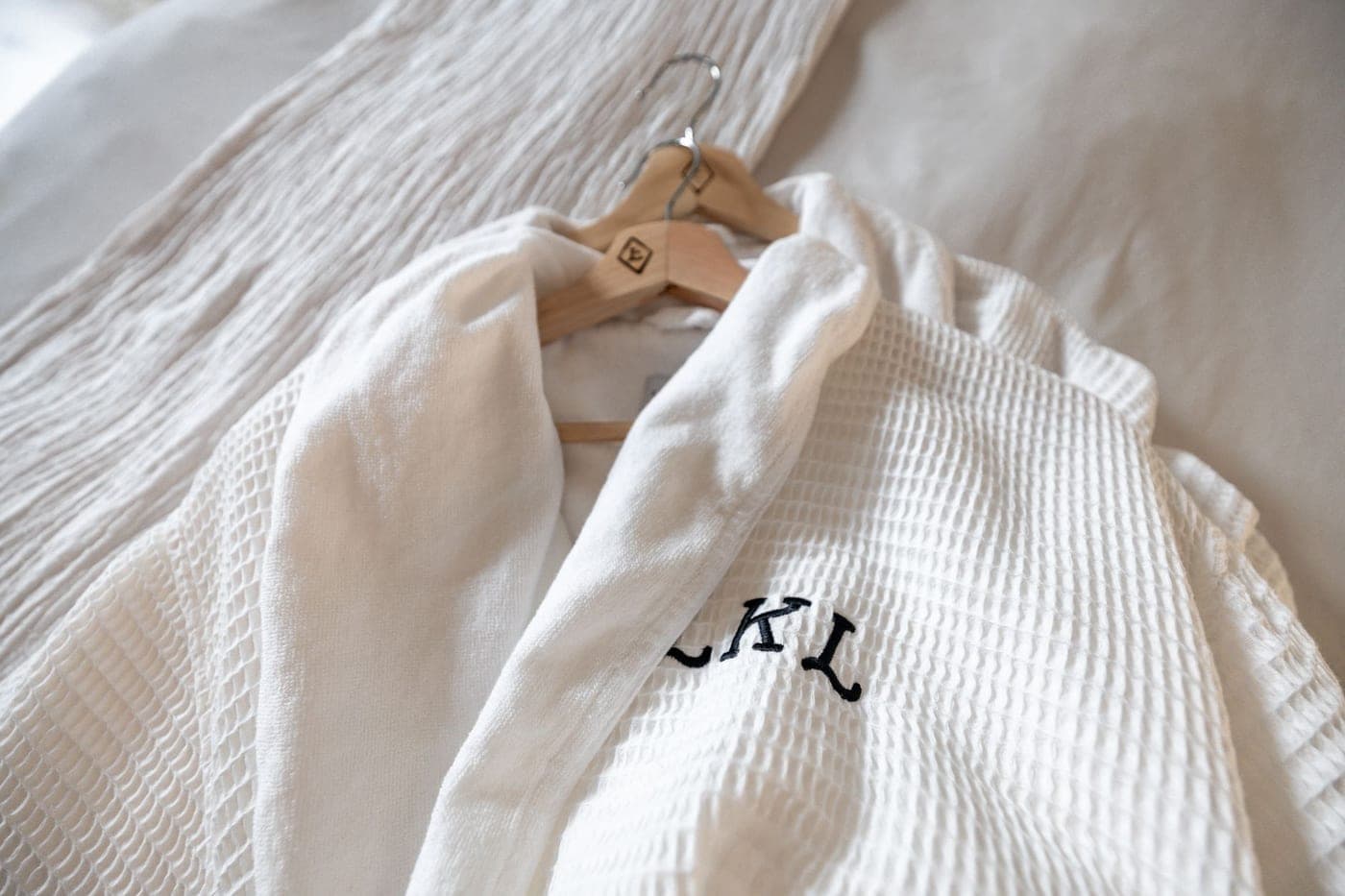
The answer turns almost entirely on construction. Terry absorbs, which is what most people want from a robe, and holds moisture, which is what eventually ruins it. Waffle barely absorbs but dries in hours and effectively never goes musty. Waffle-faced, terry-lined robes try to have both and take the longest of all to dry through.
Terry & Tub is reader-funded. We earn a commission on some links to Amazon at no extra cost to you, and we mark those links. Products we cannot earn from are included anyway when they are the right answer, and labeled as such. Full disclosure.
Start here
Robes: our picks
Every guide below carries the products we would actually buy, with the retailer link attached.
Robe GSM is quoted less often than towel GSM, and when it is quoted it is usually in the 350-500 range. Around 400-450 GSM of cotton terry is the sweet spot: heavy enough to dry you properly, light enough that the robe itself dries on a hook between uses. Below about 350 GSM a terry robe stops absorbing meaningfully. Above 500 you have a robe that is wonderful for five minutes and damp for a day and a half.
Waffle robes are not comparable on GSM at all -- a waffle robe at 300 GSM can feel more substantial than a terry robe at 400, because the raised cells hold the cloth away from the body. Judge waffle on the weave, not the number.
Why robes go musty and towels often do not
Towels get washed every few uses. Robes get washed monthly, if that. They also spend their life on a hook in the most humid room in the house, folded against themselves so the inner face never sees air. Every condition that produces bacterial growth is present, and the robe is the one item in the bathroom that nobody thinks to launder.
Two habits fix it entirely. Hang the robe open on a wide hanger rather than crushed on a hook -- the hook is what makes the shoulders stay damp. And wash it every two to three weeks on warm with an alkaline booster, which strips the body oil the bacteria feed on. The same technique from the hotel laundry method applies.
Fit, which matters more than people expect
Robes are sold in generous, vague sizes -- S/M, L/XL -- and the difference between brands is large. The two measurements worth checking are the length (a robe that stops above the knee will ride up every time you sit) and the sleeve (too long and the cuffs sit in the sink every time you wash your hands). Belt loops set at the natural waist rather than sewn high are another quiet quality signal. The sizing guide has the detail.
Frequently asked questions
+What GSM should a bathrobe be?
For cotton terry, 400-450 GSM is the practical range: absorbent enough to dry you, light enough to dry itself between uses. Waffle robes should be judged on the weave rather than on GSM.
+Is a waffle or terry robe better?
Terry if you want to put the robe on straight out of the shower and be dried by it. Waffle if you dry off first and want something that never goes musty and packs for travel. The comparison is here.
+How often should you wash a bathrobe?
Every two to three weeks in regular use, on warm with an alkaline booster. Most people wash robes far less often than this, which is why robes go musty.
+Are bathrobes worth buying?
If you will actually wear it, yes -- it saves a towel wash and is more comfortable. If it will hang on a hook unused, it is an expensive humidity trap. We argue both sides here.