Terry & Tub is reader-funded. We earn a commission on some links to Amazon at no extra cost to you, and we mark those links. Products we cannot earn from are included anyway when they are the right answer, and labeled as such. Full disclosure.
Two things on a cotton label matter: staple length (Turkish, Egyptian, Supima and Pima are long or extra-long-staple; plain "100% cotton" usually is not) and yarn processing (combed, ring-spun and zero-twist are real steps). Everything else is mostly decoration.
Towel labels carry an extraordinary number of words about cotton, and they are doing three different jobs. Some describe where the cotton grew. Some describe how the fiber was processed into yarn. And some are marketing terms with no agreed definition at all. Knowing which is which turns a confusing label into a two-second decision.
Staple length: the one that matters most
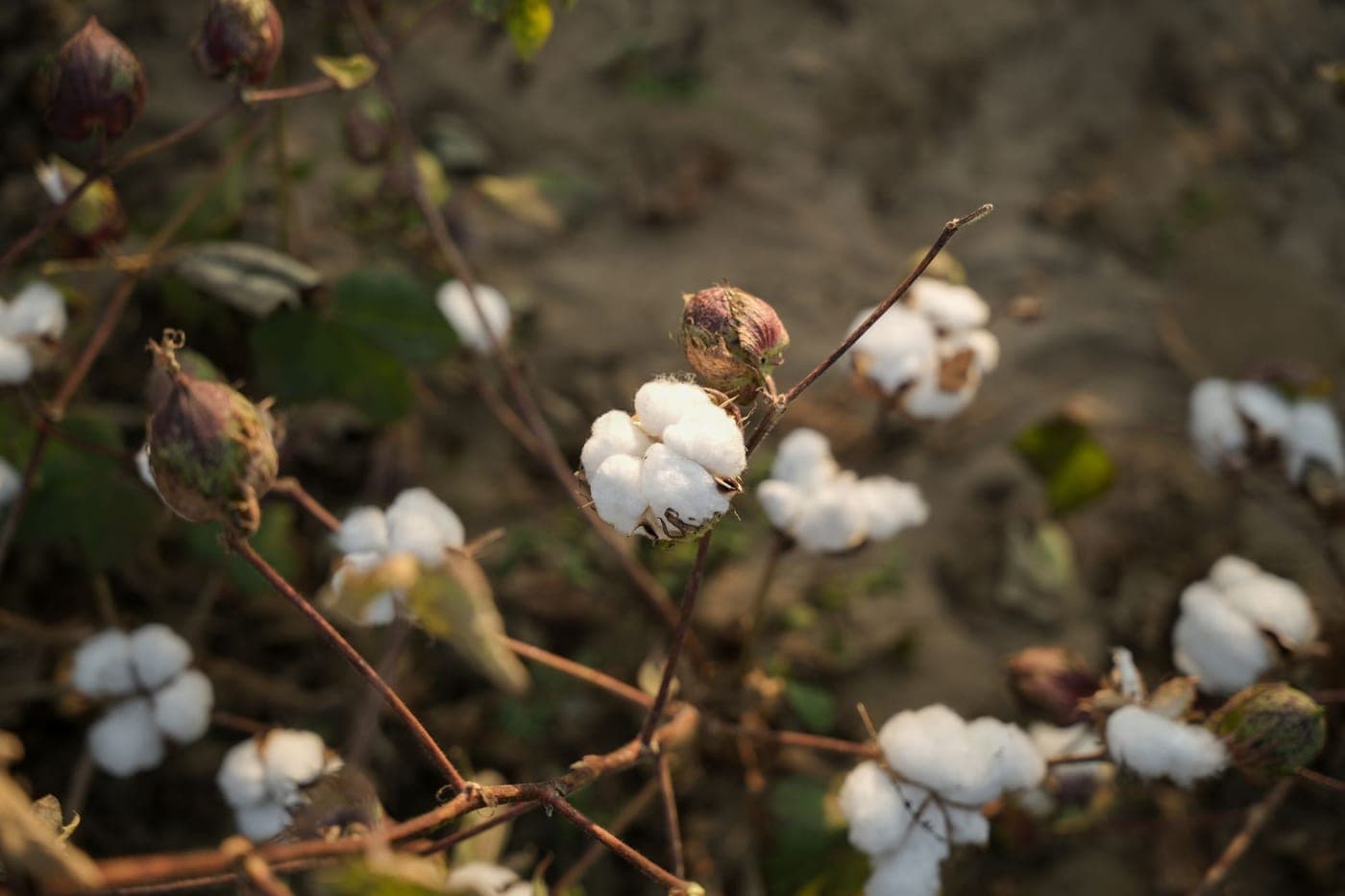
A cotton fiber is a single strand from the seed pod, and its length -- the staple -- varies by variety and growing conditions. Spin short fibers into yarn and you get a thread with an end poking out every few millimeters. Those ends are what becomes lint in your dryer, what pills on the surface, and what works loose over years until the towel goes thin at the folds.
Long-staple and extra-long-staple cottons have dramatically fewer ends per inch of yarn. That single property explains most of the difference between a towel that improves for three years and one that degrades from the first wash.
| Name on the label | Staple | What it means in a towel |
|---|---|---|
| Supima | Extra-long | Trademarked American Pima. The strongest cotton in commercial use, and the term is licensed, so it is verifiable. |
| Pima | Extra-long | Same species without the trademark. Good, but the word is unpoliced, so quality varies more. |
| Egyptian | Long to extra-long | Genuinely excellent when genuine. The term is widely abused -- look for a mill or a certification alongside it. |
| Turkish (Aegean) | Long | The workhorse of good bath linens. Slightly less absorbent day one than Egyptian, dries faster. |
| "100% cotton" | Usually short | Tells you nothing beyond the fiber. At any price above budget, the absence of more detail is the information. |
Yarn processing: the second thing worth paying for
After the cotton is picked, how it becomes thread matters nearly as much as which cotton it was.
- Ring-spun. The fibers are twisted into a smooth, strong thread. The alternative, open-end spinning, is faster and cheaper and produces a rougher yarn that pills quickly. Almost all budget terry is open-end; a budget towel that says ring-spun is a genuinely better towel.
- Combed. An extra step that mechanically removes the shortest fibers before spinning. Less lint, less pilling, a smoother surface. This is why a combed 700 GSM towel reads as dense rather than fluffy.
- Zero-twist. The yarn is spun with almost no twist, so the fibers splay open. More surface area, so faster absorbency and a notably soft hand -- at the cost of a weaker yarn that is less forgiving of a snag.
- Hygrocotton and similar hollow-core yarns. A genuine construction, not a brand word: the yarn is spun around a hollow core that traps air, and the loft measurably increases over the first dozen washes rather than decreasing.
Terms that mean less than they sound like
"Luxury", "premium", "hotel quality", "spa". No definition, no standard, no enforcement. Ignore them entirely and read the specs underneath.
"Organic". A real certification about how the cotton was grown, and a good thing. It says nothing whatsoever about staple length, spinning or durability -- an organic short-staple towel is still a short-staple towel.
"Bamboo". Almost always bamboo viscose, which is a regenerated fiber chemically processed from bamboo pulp. It is soft and it is weaker when wet than cotton, which matters for something that is wet daily. Blends are common and fine; be aware of the trade.
"Thread count". A sheeting measurement. On a looped pile it means essentially nothing, and a towel listing that leads with it is telling you what it does not have.
Certifications worth noticing
OEKO-TEX Standard 100 means the finished textile has been tested for harmful substances. It is not a quality or durability mark, but it does mean somebody independent looked at the product, and it is common on the better mid-market towels.
GOTS covers organic fiber content plus processing and social criteria. More demanding than a plain "organic" claim.
What this means when you are buying
Read the label in this order and you will be right nearly every time: staple length first, spinning second, weave third, GSM fourth. If the first two are good, a mid-range GSM will outperform a heavier towel that has neither.
Concretely: a 550 GSM combed Turkish cotton towel beats a 700 GSM unspecified-cotton towel on lifespan, lint, pilling and how it feels in year three -- and it dries faster. That is the whole guide in one sentence. Our picks are built on it, and the GSM guide covers the fourth item.
Frequently asked questions
Is Egyptian cotton better than Turkish cotton for towels?
Egyptian is generally longer-staple and denser, so it is plusher and slightly more absorbent. Turkish dries faster and costs less. Both are long-staple, and the gap between them is much smaller than the gap between either and unspecified cotton. Full comparison.
What does zero-twist mean on a towel?
The yarn is spun with almost no twist, so the fibers splay open. That gives more surface area -- faster absorbency and a softer hand -- at the cost of a weaker yarn that snags more easily.
Is Supima cotton worth the extra money?
For a towel, yes. Supima is extra-long-staple and the trademark is licensed, so the claim is verifiable -- which is more than can be said for most "Egyptian cotton" labeling.
What is the difference between ring-spun and combed cotton?
Ring-spun describes how the yarn is twisted; combed describes an extra cleaning step that removes short fibers before spinning. A towel can be both, and the best ones are.
Are bamboo towels better than cotton?
They are softer and they are weaker when wet, which matters for something soaked daily. Bamboo-cotton blends are a reasonable compromise; pure bamboo viscose is not our first choice for a bath towel.