Terry & Tub is reader-funded. Every buy button here goes to Amazon and earns us a commission at no extra cost to you. Brands we cannot earn from are reviewed anyway when they are the right answer, with a citation instead of a buy button. Full disclosure.
A zero-twist towel is made from yarn whose cotton fibers are held together by a wrapping process instead of being twisted around each other. Untwisted loops expose more fiber surface, so the towel absorbs faster and feels softer at the same weight. The cost is durability at the loop: a pulled thread in a zero-twist towel cannot be worked back in.
Twist is the most consequential thing on a towel label that nobody reads. GSM gets all the attention, cotton grade gets some, and twist -- which decides how a towel feels and how it fails -- usually goes unmentioned.
What twist actually is
Cotton arrives as short fibers. To make thread, you twist them together; the twist is what generates the friction that stops the fibers sliding apart. More twist means a stronger, harder, thinner yarn. Less twist means a weaker, softer, bulkier one.
On a towel, that yarn is then looped into a pile. A tightly twisted loop is a small dense spring: durable, slower to wet out, firmer underhand. A barely twisted loop is a soft open brush: it wets instantly, it feels plush, and it has very little internal strength.
Zero twist is the far end of that spectrum. There is no meaningful twist at all, so something else has to hold the fibers together -- usually a binder yarn wrapped around them during spinning, which washes out and leaves the loop open. Matouk describes its own version as fibers held together with a special wrapping process rather than twisted.
| Yarn | Feel | Absorbency | How it fails |
|---|---|---|---|
| Conventional twist | Crisp, firm | Good after break-in | Pile flattens, hem frays |
| Low twist / two-ply | Soft, some body | Fast | Gradual pile loss |
| Zero twist | Very soft, airy | Fastest at its weight | Snags pull permanently |
Why zero twist only works on long-staple cotton
This is the part that explains the price. If you remove the twist, the only thing stopping the yarn falling apart is the length of the individual fibers. Short-staple cotton spun without twist is not a yarn, it is fluff.
So every honest zero-twist towel is made from extra-long-staple cotton -- Egyptian, Supima, or Aegean Turkish. If a listing advertises zero twist and does not name a long-staple cotton, treat the claim as decorative. Every cotton term on a towel label, decoded.
Four towels that let you compare the three yarn choices directly: two zero-twist, one two-ply low-twist, and one conventional hotel-spec terry as the control.
Plush without the twist
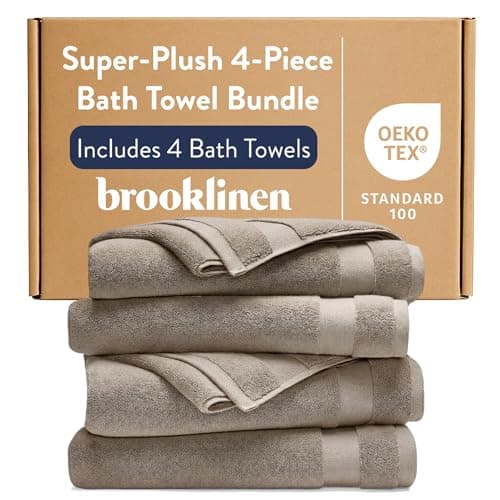
Brooklinen Super-Plush Turkish Cotton Bath Towel
Zero-twist Aegean Turkish cotton, originally 820 GSM and reduced to 770 GSM after customers said it took too long to dry -- a rare case of a brand trading loft for usability.
#ad How we are funded · Price as of November 3, 2026
The heaviest towel on this site
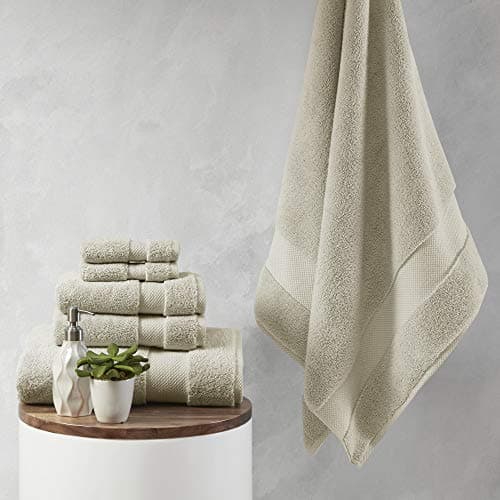
Madison Park Splendor 1000 GSM Cotton Plush Towel Set
1000 GSM of long-staple zero-twist cotton -- a genuinely extraordinary object to pick up, and a guest-bathroom towel by physics rather than by marketing.
#ad How we are funded · Price as of November 3, 2026
Organic certification with a published weight
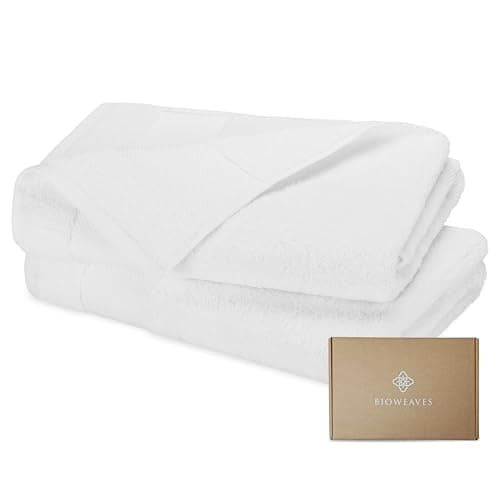
BIOWEAVES Organic Cotton 700 GSM Bath Towels
GOTS-certified organic cotton at a stated 700 GSM in a two-ply low-twist yarn -- organic terry that tells you its density instead of asking you to take the certification on faith.
#ad How we are funded · Price as of November 3, 2026
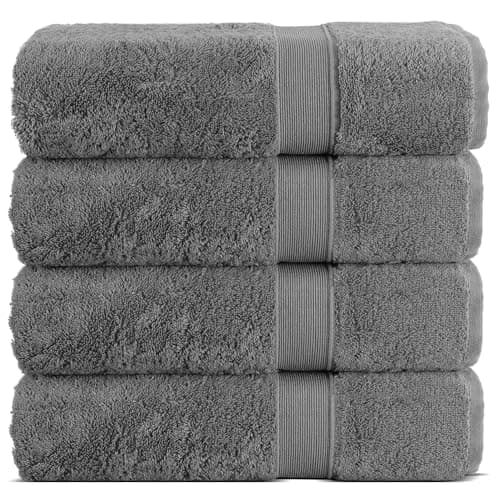
Hotel feel at a hotel-supply price
Chakir Turkish Linens Hotel & Spa Bath Towel
A 550-600 GSM long-staple Turkish cotton towel built to the hotel-and-spa spec, which is exactly the crisp, medium-weight towel most people are actually trying to buy.
The zero-twist towel to try first: Brooklinen Super-Plush
770 GSM of 100% Aegean Turkish cotton, zero-twist and hemstitched, OEKO-TEX certified. Brooklinen reduced this towel from 820 GSM to 770, which is the right direction of travel -- the whole argument for zero twist is that you get plushness from loop structure rather than from sheer mass, so adding mass on top of it works against the technique.
It is still a heavy towel and it needs airflow. Our full review of the brand, including what changed when the weight dropped.
Zero twist at maximum weight: Madison Park Splendor 1000 GSM
1000 GSM of long-staple zero-twist yarn, Made in Green by OEKO-TEX. This is the clearest demonstration available of what zero twist does and what it costs: it is softer than any twisted towel at any weight, and it will not finish drying in an ordinary bathroom.
Our view has not changed from the towel GSM guide: this is a guest-rail towel. Bought for that job, it is excellent.
The low-twist middle ground: BIOWEAVES 700 GSM
GOTS-certified organic cotton in a two-ply low-twist yarn at a published 700 GSM. Low twist, not zero twist -- which is the compromise most people actually want and almost nobody shops for by name.
Two-ply low-twist gives you most of the softness of zero twist with enough residual structure that a snag is survivable. If the snag problem above worries you and you still want a soft towel, this is the pick.
The conventional towel for comparison: Chakir Hotel & Spa
550-600 GSM of long-staple Turkish cotton, conventionally spun, built to hotel laundry spec. It is on this page as the control. It is firmer than everything above it, it takes longer to wet out in the first ten washes, and it will survive handling that would mark a zero-twist towel permanently.
Hotels buy conventional twist for exactly that reason, and the choice tells you something: when a towel has to survive being handled by hundreds of strangers and laundered industrially, nobody specifies zero twist.
So which should you buy?
- Zero twist if softness is the thing you are buying, your bathroom has real airflow, and you are careful with your towels.
- Low twist or two-ply if you want soft and you want it to survive a family. This is the best default.
- Conventional twist if the towel has to last, go into a rental, or be washed hot and often. Also the right answer for white towels.
One thing is true of all three: fabric softener ruins them identically, and it ruins zero twist fastest, because an open loop has the most surface area to coat. What softener actually does to a towel.
Frequently asked questions
What does zero twist mean on a towel?
That the cotton fibers in the yarn are held together by a wrapping process rather than twisted around each other. The loops stay open, which makes the towel softer and faster-absorbing at the same weight.
Are zero twist towels better?
Softer and faster-absorbing per gram, yes. More durable, no. A snagged zero-twist loop pulls out permanently, where a twisted loop can usually be snipped flush and forgotten.
Do zero twist towels last?
The pile holds its loft better than a twisted towel of the same age, because there is no twist to relax. What ends them is snagging, not flattening.
Is zero twist the same as low twist?
No. Low twist and two-ply low-twist yarns keep some twist, which gives up a little softness in exchange for a loop that survives being caught. For most households low twist is the better buy.
Why are zero twist towels expensive?
Because they only work on extra-long-staple cotton. Remove the twist and fiber length is the only thing holding the yarn together, so the technique requires Egyptian, Supima or Aegean Turkish cotton.