Terry & Tub is reader-funded. Every buy button here goes to Amazon and earns us a commission at no extra cost to you. Brands we cannot earn from are reviewed anyway when they are the right answer, with a citation instead of a buy button. Full disclosure.
Buy a stone bath mat if the thing you hate about bath mats is washing them and the permanent damp smell; it is dry a minute after use and never goes in a machine. Buy cotton if you want something warm and soft underfoot, you have small children, or your floor is uneven -- and accept washing it weekly.
Stone mats arrived in ordinary bathrooms about five years ago and the discussion about them has been strangely unhelpful ever since. They are usually sold as an upgrade and criticized as a gimmick, and neither framing is right.
They are a different product that solves a different problem. Nobody buys a diatomite mat because it is a better bath mat; they buy it because they are tired of the one they have being wet. If that is not the thing bothering you, stone is the wrong purchase at any price.
The comparison in one table
| Stone (diatomite) | Cotton | |
|---|---|---|
| Dry time | About a minute | Hours to overnight |
| Underfoot | Cold, hard, flat | Warm, soft, cushioned |
| Laundering | Never -- wipe and air | Machine wash weekly |
| Maintenance | Sand the surface every few months | Strip and whiten occasionally |
| Smell over time | Effectively none | Musty if it does not dry |
| Breaks if | Dropped on a hard floor | Nothing -- it just wears out |
| Sizes | About 23 x 15 in only | 17 x 24 up to 30 x 50 in |
| Uneven floor | Rocks and can crack | Conforms fine |
The case for stone
It solves the damp problem completely. Diatomaceous earth is a porous mineral with an enormous internal surface area; water wicks in and evaporates out instead of sitting in a pile. The Dorai mat absorbs up to 150% of its own weight and reads dry within a minute of being stood on.
It never goes in the laundry. No weekly wash, no backing to crack in the dryer, no mat taking up a whole machine cycle on its own. For a lot of households this is worth more than anything else on this page.
It does not smell. The musty bath-mat smell is bacteria and mildew in a wet textile. Remove the textile and remove the smell. Why it happens at all.
The case against stone
It is cold and hard. On a winter morning, stepping out of a hot shower onto a cold slab is a genuinely unpleasant experience, and no amount of design language changes it.
It cracks. Drop it on tile, or let a child stand on one edge, and it breaks. We would not put one in a bathroom used by small children.
One size, essentially. Both mats here are about 23 x 15 in. If you need a runner for a double vanity or a mat that reaches a wall, stone cannot do it. Bathroom rug sizes covers what fabric can.
It needs sanding. Soap and skin oil seal the pores over a few months and absorbency drops. The Sutera includes the sanding tool; with the Dorai you buy or improvise one. It is five minutes, and it is a chore people do not expect.
The case for cotton
It is pleasant. This is not a trivial argument. A warm, soft mat is a small daily comfort, and a bathroom is a room where small daily comforts are most of the point.
It launders, so it can be restored. A gray, tired cotton mat can be stripped, oxygen-bleached and brought back. A sealed stone mat can be sanded, and a cracked one is rubbish.
It comes in real sizes. The Company Store cotton rug runs 17 x 24, 21 x 34, 24 x 40 and 24 x 24 in. That flexibility is the whole reason fabric still dominates the category.
The case against cotton
Dry time, and everything downstream of it. A cotton mat on a tile floor dries from one face. In a bathroom with poor ventilation it never fully dries, and then it smells, and then the backing goes.
It is a weekly laundry job that cannot be combined with towels, because the pile sheds and the backing flakes.
The four mats we would actually buy from the two camps -- two diatomite stone mats and two cotton rugs, so you can compare the trade directly.
The stone mat that started it
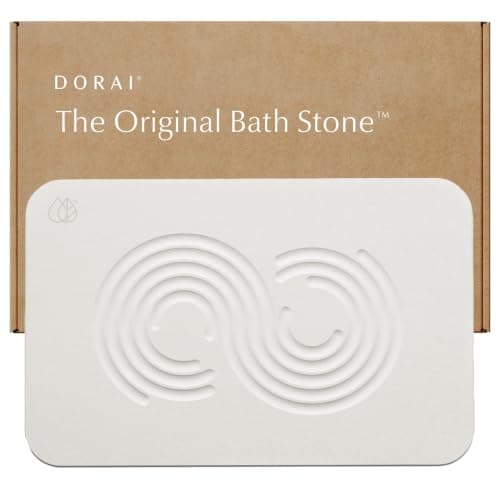
Dorai Home Stone Bath Mat
Diatomaceous earth and recycled paper, absorbing up to 150% of its own weight and evaporating it in seconds, on a rubberized non-slip base.
#ad How we are funded · Price as of November 3, 2026
Stone with the maintenance kit included
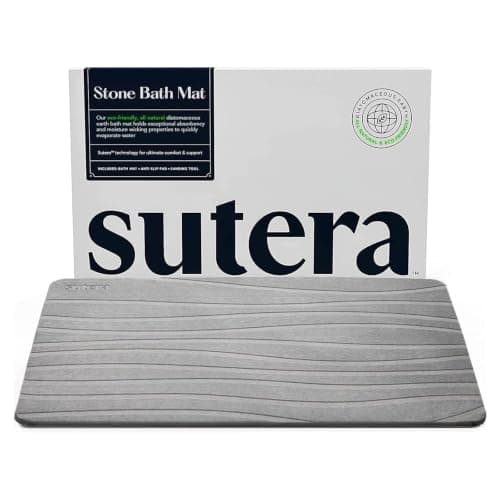
Sutera Stone Bath Mat
A diatomaceous earth mat at 23.5 x 15 in that ships with both a grip pad and the sanding tool the category actually needs.
#ad How we are funded · Price as of November 3, 2026
The best plain cotton bath rug
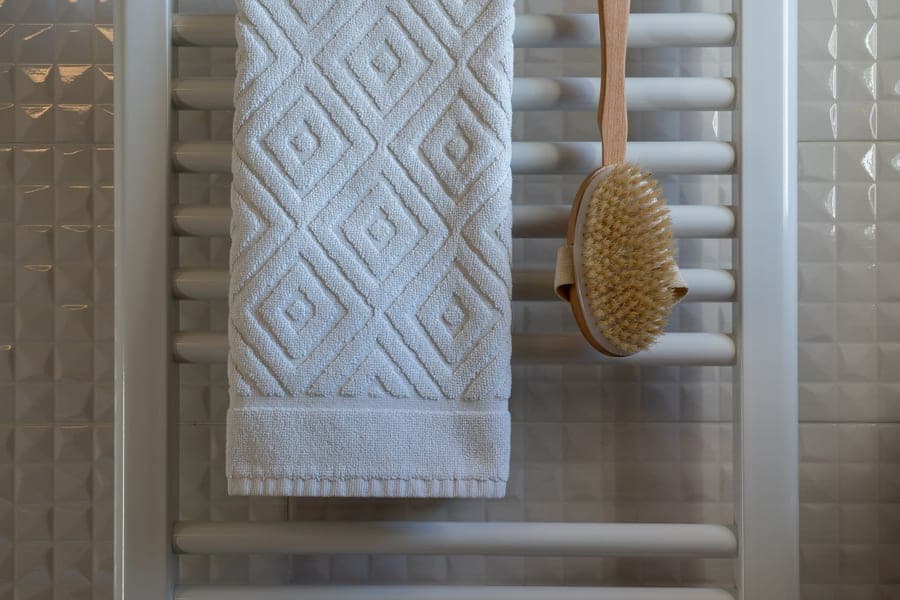
The Company Store Company Cotton Bath Rug
100% cotton across four sizes, with no rubber backing to disintegrate -- the reason a plain cotton rug still beats most engineered mats.
Cotton that actually dries
Green Earth Quick Dry Bath Rug
A cotton bath rug engineered around dry time rather than plushness, in sizes from 17 x 24 up to 30 x 50 in.
The stone picks
Dorai Home is the one to buy if you just want the mat: diatomaceous earth and recycled paper, 23.6 x 15.4 in, rubberized non-slip base, in sandstone or slate.
Sutera is the one to buy if your floor is polished tile or you want the maintenance sorted in the box -- it ships with an ultra-grip pad and the sanding tool. All the stone mats we rate.
The cotton picks
The Company Store Company Cotton bath rug is the best plain cotton mat we have found, in four sizes, and it is the default recommendation for anyone who wants cotton and does not have a ventilation problem.
Green Earth Quick Dry is the pick if you want cotton and you do have a ventilation problem: a cotton rug built for dry time rather than for depth, in sizes up to 30 x 50 in. More cotton mats.
What we would actually do
Own both, in different places. A stone mat where you step out of the shower, which is where the water is and where the damp problem lives. A cotton rug in front of the vanity, which is where you stand in bare feet and want something warm.
That is also the arrangement that makes sense of the sizes: stone only comes in one, and 23 x 15 in is a shower-exit size, not a room size.
Frequently asked questions
Are stone bath mats better than cotton?
Better at drying fast and not smelling; worse at being warm, soft and available in useful sizes. Pick stone if damp and laundry are what bother you, cotton if comfort underfoot is.
Do stone bath mats actually work?
Yes. Diatomaceous earth is a genuinely porous mineral and the water wicks in and evaporates; the Dorai mat is rated to absorb up to 150% of its weight and reads dry within a minute.
What is the downside of a stone bath mat?
It is cold and hard underfoot, it comes in essentially one size, it cracks if dropped, and it needs its surface sanded every few months once soap seals the pores.
Can you wash a stone bath mat?
Not in a machine. You wipe it, let it air, and sand the surface when absorbency drops. That is the appeal for some households and the dealbreaker for others.
Are stone bath mats safe for children?
We would not use one in a bathroom used by small children. It is a hard surface that cracks under point loads, and a cracked diatomite edge is sharp.
Which lasts longer, stone or cotton?
Stone, if it never gets dropped -- there is no pile to flatten and no backing to delaminate. Cotton mats are consumables that last one to three years depending on how well they dry.