Terry & Tub is reader-funded. Every buy button here goes to Amazon and earns us a commission at no extra cost to you. Brands we cannot earn from are reviewed anyway when they are the right answer, with a citation instead of a buy button. Full disclosure.
Yes. Hard water leaves calcium and magnesium deposits in the pile of a towel, which makes it feel rough and stiff and reduces how fast it absorbs. The fix is a water softener in the wash -- washing soda (sodium carbonate) at about half a cup per load -- not more detergent, which makes it worse.
If your towels went stiff and slightly rough within a year, you live somewhere with hard water, and you have been told to use more detergent, this page is the explanation and it is shorter than you expect.
What hard water actually does
Hard water contains dissolved calcium and magnesium. Two things happen when it meets detergent in a washing machine.
- The minerals react with the detergent and form an insoluble residue -- the same substance as the scum ring in a bath. That residue is deposited in the towel rather than rinsed away.
- The minerals themselves deposit in the pile as the water evaporates, which is the same process that leaves limescale in a kettle.
The result is a towel with a thin layer of mineral and soap scum coating every loop. It feels rough because there is literally grit in it. It absorbs slowly because water has to get past the deposit to reach the cotton. And it holds odor, because the deposit is a surface for bacteria to live on.
What hard water does not do is damage the cotton. The fiber is fine. This is entirely a coating problem, which is why it is entirely reversible.
Is it hard water or too much detergent?
The symptoms overlap almost completely, and the fix is slightly different, so it is worth telling them apart.
| Clue | Hard water | Too much detergent |
|---|---|---|
| How it feels | Rough, gritty, crunchy | Slick, waxy, soft but water-repellent |
| Kettle and shower screen | Visible limescale | Clean |
| Whites | Gray and dull | Gray and slightly yellow |
| More detergent | Makes it worse | Makes it worse |
| Extra rinse | Barely helps | Helps noticeably |
| The fix | Washing soda in every load | Halve the dose |
In practice most households with hard water have both, because hard water is the reason people started overdosing detergent in the first place -- detergent lathers poorly in hard water, so it feels like it is not working.
The fix, in two stages
Stage one: strip what is already there. A hot soak with washing soda and oxygen bleach dissolves the existing deposit and the soap scum with it. One evening, and the difference on a stiff towel is dramatic. The full stripping method.
Stage two: stop it coming back. Add washing soda to every towel wash -- about half a cup for a hard-water area -- and cut your detergent dose. Sodium carbonate binds the calcium and magnesium so they cannot react with the detergent or deposit in the pile, which means the detergent can actually do its job at a lower dose.
That is the whole routine. There is no third stage and nothing to buy monthly.
What to use
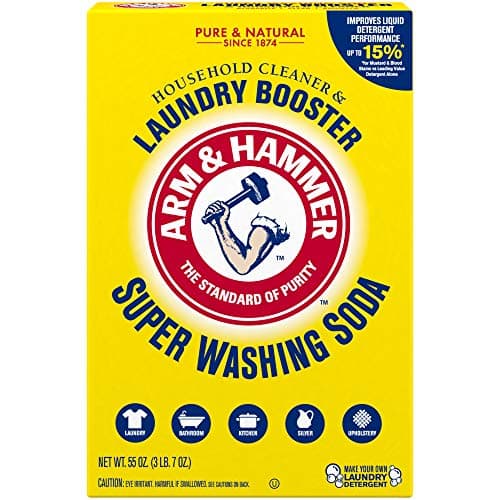
Arm & Hammer Super Washing Soda is sodium carbonate, which is both the water softener and a detergent booster. This is the product that solves the problem; everything else on this page is support.
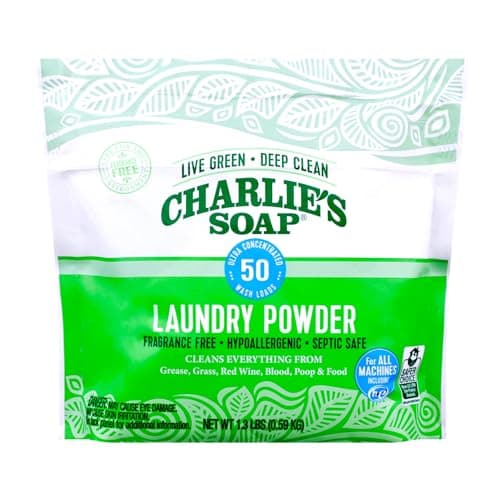
Charlie's Soap laundry powder is washing-soda based with four ingredients, dosed at a tablespoon per load, and designed to rinse completely out of a pile. In hard water, a detergent that rinses clean matters more than one that cleans aggressively, because residue is half the problem.
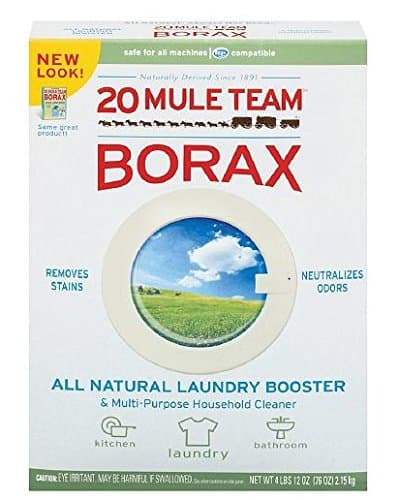
Borax is sodium tetraborate and worth adding if the towels have started to smell as well as stiffen -- the mineral deposit gives bacteria somewhere to live, so the two faults usually arrive together. The full boosters roundup.
The washing soda that solves the problem, the detergent that stops it returning, and the booster for the smell that usually arrives with it.
Hard water and greasy build-up
Arm & Hammer Super Washing Soda
Sodium carbonate -- a stronger alkali than baking soda that boosts detergent performance and is the standard answer for greasy, hard-water-stiffened towels.
#ad How we are funded · Price as of November 3, 2026
Detergent that rinses completely out
Charlie's Soap Laundry Powder
A four-ingredient, washing-soda-based powder that produces no suds and rinses clean -- which is the single property that matters for towels.
#ad How we are funded · Price as of November 3, 2026
Musty smell, specifically
20 Mule Team Borax Laundry Booster
A natural mineral booster that neutralizes odor by cutting the oil and bacteria behind it -- the right tool for towels that smell, rather than towels that are gray.
#ad How we are funded · Price as of November 3, 2026
What about vinegar?
White vinegar does dissolve mineral deposit, and it is a reasonable one-off treatment in the rinse. It is not a routine answer for two reasons: it does nothing for the soap-scum half of the problem, and acid in a rinse cycle over years is not kind to the rubber seals in a washing machine.
Washing soda in the wash beats vinegar in the rinse for this specific fault. And never use the two together -- they neutralize each other and you get a salty nothing. Vinegar versus baking soda, properly.
Does hard water shorten a towel's life?
Indirectly, and significantly. The fiber is not damaged, but a mineral-loaded towel absorbs slowly, which means it holds water at the surface for longer, which means it dries more slowly and smells sooner -- and a towel that smells gets washed hotter and more often, which is what actually wears it out.
Fix the water and the whole chain stops. How long towels should last.
Buying towels for a hard-water area
The rules are below. The hard-water towel picks apply them to five towels you can buy today, and explain why the plushest towel is the wrong answer in this water.
- Long-staple cotton. Fewer, longer fibers means less surface for deposit to cling to, and the towel survives the hotter washing that hard water encourages.
- Mid-weight, 550-650 GSM. A dense heavy pile has more internal surface for minerals to accumulate on and dries more slowly once they have.
- White, if you can. It takes the hot oxygen-bleach soaks that keep deposit under control. Best white bath towels.
- Open constructions help. Waffle and ribbed weaves hold less water and rinse more freely than deep flat terry.
Frequently asked questions
Does hard water make towels rough?
Yes. Calcium and magnesium from the water deposit in the pile, along with the insoluble scum they form with detergent, and the towel ends up with a gritty coating on every loop.
How do you fix towels ruined by hard water?
Strip them once with a hot soak in washing soda and oxygen bleach to dissolve the existing deposit, then add about half a cup of washing soda to every towel wash and reduce your detergent dose.
Does hard water make towels smell?
It makes the smell more likely. The mineral deposit gives bacteria a surface to live on and slows absorbency, so the towel stays wet longer -- which is what actually produces the musty smell.
Should you use more detergent in hard water?
No. More detergent in hard water means more insoluble scum deposited in the towel. Add a water softener such as washing soda instead and keep the detergent dose low.
Does vinegar help towels in hard water?
As a one-off rinse, somewhat -- it dissolves mineral deposit. It does nothing about the soap scum and is not something we would run in every load. Washing soda in the wash is the better routine answer.
Does hard water damage cotton towels?
Not the fiber itself. The harm is a coating, which is why it is fully reversible -- but a coated towel dries slowly and gets washed harder, and that does shorten its life.