Terry & Tub is reader-funded. Every buy button here goes to Amazon and earns us a commission at no extra cost to you. Brands we cannot earn from are reviewed anyway when they are the right answer, with a citation instead of a buy button. Full disclosure.
A bath towel washed properly lasts three to five years; washed with too much detergent and fabric softener, two. Replace a towel when the pile has worn through, the hem has unraveled, or it will not come clean after a hot oxygen-bleach soak. Thin-feeling, stiff or slow-absorbing towels are usually recoverable, not finished.
Towels do not really wear out in the way that shoes or sheets do. The pile loses loft slowly and the cloth gets thinner over years, but the thing that ends most towels is not abrasion -- it is build-up, and build-up is reversible.
That is why so many towels get replaced early. A towel that has stopped absorbing, feels slick, smells when it gets wet and looks gray reads exactly like a worn-out towel. Nine times out of ten it is a towel carrying two years of detergent residue and fabric softener, and one hot soak brings it back.
How long towels actually last
| Item | Washed well | Washed badly |
|---|---|---|
| Bath towel, long-staple cotton | 4-5 years | 2 years |
| Bath towel, budget ring-spun | 2-3 years | 1-2 years |
| Bath sheet | 3-4 years | 2 years |
| Hand towel | 2-3 years | 1-2 years |
| Washcloth | 1-2 years | Under a year |
| Bath mat, fabric | 1-3 years | Under a year |
"Washed badly" is a specific thing and not a judgment: double the recommended detergent dose, fabric softener in every load, hot tumble drying every time, and towels washed with clothes. Each of those is normal in most houses and each costs a towel about a year.
Five signs a towel is genuinely finished
- You can see the backing cloth through the pile in the places you use most -- the middle of the towel and along the fold. That is abrasion and it does not come back.
- The hem has unraveled or the long edge has frayed open. Repairable in principle, not worth it in practice once it has started in two places.
- Holes, usually at the fold lines, where the cloth has been creased wet for years.
- It stays gray or yellow after a hot oxygen-bleach soak. If the color will not shift with the strongest treatment that is safe for cotton, it is permanent.
- The smell survives a strip wash. Mildew that has rooted into the fiber rather than sitting on it is the one thing you cannot reliably remove.
Three signs that look terminal and are not
These are the three reasons people throw away towels that had years left in them.
It has stopped absorbing. Almost always a coating -- detergent residue, fabric softener, or hard-water minerals -- sitting on the fibers and repelling water. This is the single most recoverable fault in the category. Why towels stop absorbing.
It feels stiff or scratchy. Also build-up, often mineral if you live in a hard-water area. Towels get stiff from residue, not from age. How to soften towels properly.
It smells musty when it gets wet. Bacteria in the pile rehydrating. A hot wash with an oxygen bleach soak removes it in one pass in most cases. Why towels smell, and the fix.
The two products that extend a towel's life
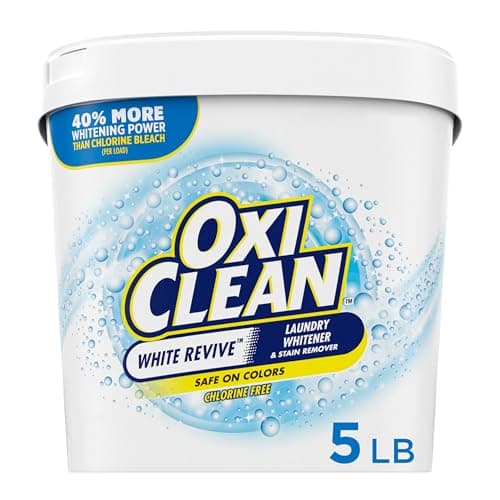
OxiClean White Revive is an oxygen-bleach-based whitener and booster, safe on colors as well as whites. It is the thing to reach for before you decide a towel is finished -- a monthly hot soak is what keeps a towel in the four-to-five-year band rather than the two-year one.
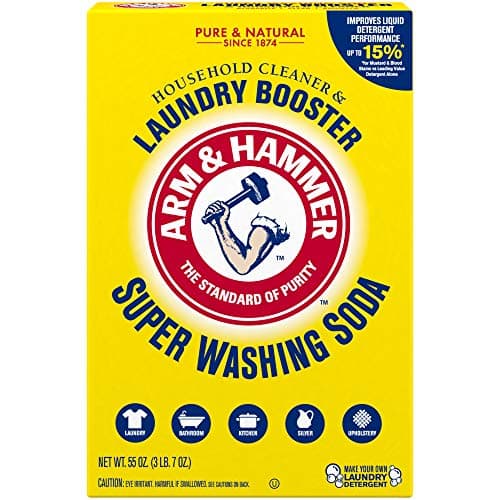
Arm & Hammer Super Washing Soda is sodium carbonate: a detergent booster and water softener. In a hard-water area this is the product that stops mineral build-up accumulating in the first place, which is the mechanism behind most premature towel retirement. Hard water and towels.
Two products that keep a towel in the four-to-five-year band, and the towel we would buy when one genuinely does reach the end.
Keeping white towels white
OxiClean White Revive Laundry Whitener
An oxygen-bleach whitener the brand claims whitens 40% better per load than chlorine bleach -- and, unlike chlorine, it does not attack the cotton.
#ad How we are funded · Price as of November 3, 2026
Hard water and greasy build-up
Arm & Hammer Super Washing Soda
Sodium carbonate -- a stronger alkali than baking soda that boosts detergent performance and is the standard answer for greasy, hard-water-stiffened towels.
#ad How we are funded · Price as of November 3, 2026
Hotel feel at a hotel-supply price
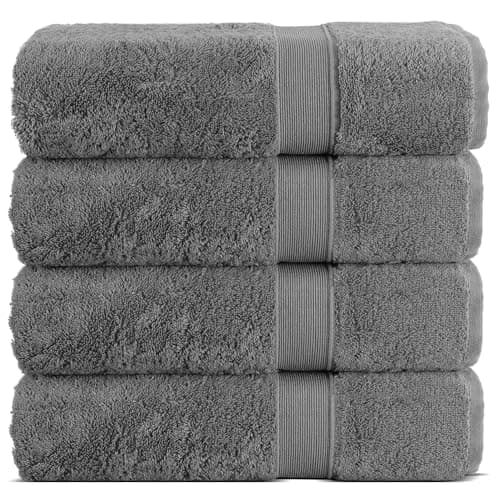
Chakir Turkish Linens Hotel & Spa Bath Towel
A 550-600 GSM long-staple Turkish cotton towel built to the hotel-and-spa spec, which is exactly the crisp, medium-weight towel most people are actually trying to buy.
When you do replace: buy differently
If towels are reaching the end at two years, the problem is more likely the wash routine than the towel. But two purchasing choices genuinely change the number.
- Long-staple cotton. Turkish, Egyptian, Supima or Pima on the label. It softens with washing instead of thinning, which is the whole difference between a four-year towel and a two-year one. Cotton terms decoded.
- A double-stitched or double-needle hem. The long edge is what fails first on almost every towel that was not abraded to death.
- A weight your bathroom can dry. 550-700 GSM. A heavier towel is not a longer-lasting towel; in a bathroom with no airflow it is a shorter-lasting one. Why GSM is a trade.
The Chakir Hotel & Spa towel is the replacement we would buy by default: 550-600 GSM long-staple Turkish cotton built to a spec designed for industrial laundering, which is the closest thing in this category to a towel engineered for longevity. The towels that last longest goes through the alternatives.
What to do with the old ones
A towel that is finished as a bath towel is rarely finished as a towel. Cut the hem off and it becomes cleaning cloths, dog towels, car towels or paint rags, and most textile recycling schemes and animal shelters accept old towels in quantity.
Retire them one at a time rather than all at once, and keep the rail matched -- which is far easier if you bought a set you can still buy two years later.
Frequently asked questions
How often should you replace bath towels?
Every three to five years if they are long-staple cotton washed without softener and dosed correctly, or every two years if they are not. Replace on condition rather than on a schedule.
How do you know when a towel needs replacing?
The backing cloth shows through the pile, the hem has frayed open, there are holes at the fold lines, or the color and smell survive a hot oxygen-bleach soak. Anything short of that is usually recoverable.
Why do my towels wear out so fast?
Usually too much detergent, fabric softener in every load and hot tumble drying. Each of those costs a towel about a year, and together they turn a five-year towel into a two-year one.
Can old towels be revived?
Often, yes. Towels that have stopped absorbing, gone stiff or smell musty are almost always carrying build-up rather than worn out, and a hot strip wash in oxygen bleach and washing soda brings them back.
How long do hand towels last?
Two to three years washed well. They have a shorter life than bath towels because they are used far more often and washed far more often, and every wash is wear.
Should you replace all your towels at once?
No -- retire them one at a time as each fails, which is cheaper and keeps the rail matched. That is much easier if the line you bought is still in stock, so choose a towel you can top up later.