Terry & Tub is reader-funded. Every buy button here goes to Amazon and earns us a commission at no extra cost to you. Brands we cannot earn from are reviewed anyway when they are the right answer, with a citation instead of a buy button. Full disclosure.
Wash a bath towel after three uses, a hand towel every two to three days, and a washcloth after every single use. Those intervals assume the towel dries fully between uses -- if it does not, the real answer is every use, because a towel that never dries is growing bacteria whether you have used it once or five times.
The question is usually asked as a hygiene question and the honest answer is that it is a drying question. A clean body transfers very little to a towel; what makes a towel unpleasant is moisture, and moisture is a bathroom problem rather than a body problem.
Which is why two households can wash towels on completely different schedules and both be right. A towel on a heated rail in a ventilated bathroom is genuinely fine on use four. The same towel on a hook behind a door was finished after one.
The intervals, item by item
| Item | Wash after | Why |
|---|---|---|
| Bath towel | 3 uses | Dries between uses; low soil load from clean skin |
| Bath sheet | 3 uses | Same, but needs more airflow to get there |
| Hand towel | 2-3 days | Many users, often on unwashed hands, rarely dries fully |
| Kitchen-adjacent hand towel | Daily | Food contact changes the calculus entirely |
| Washcloth | Every use | Used on the face, stays balled up, never dries |
| Bath mat | Weekly | Standing water plus floor soil |
| Gym or swim towel | Every use | Goes into a bag wet, which is the worst case there is |
Why hand towels are the real problem
A bath towel dries a clean body. A hand towel dries hands that have just been washed -- and hands that have not. It is used by everybody in the house, many times a day, and it is almost always a small towel folded over a ring, which is the worst drying geometry in the bathroom.
If you only change one habit after reading this, change hand towels more often than you change bath towels. Two to three days, and daily in a bathroom used by several people or anyone unwell.
The practical fix is quantity, not vigilance: own enough hand towels that swapping one is trivial. How many towels you actually need does the arithmetic.
When to wash more often
- Anyone in the house is ill. Every use, and separately from everything else.
- A skin condition, a wound or a fungal infection. Every use, washed hot.
- No window and no extractor. Every use or every second use, because nothing is drying.
- Long hair. A towel used on wet hair carries far more water than one used on skin, and takes correspondingly longer to dry.
- Shared towels. Any towel used by more than one person, every use.
- Hard water. Not a hygiene issue, but build-up reduces absorbency so the towel stays wetter for longer. What hard water does to towels.
When you can wash less often
Three uses is a floor rather than a ceiling, and there is a real argument for stretching it: every wash is wear. A towel has a finite number of cycles in it, and washing a towel that did not need washing costs you some of them.
If your towel is fully dry and odor-free when you pick it up, it is fine. On a heated rail in a ventilated bathroom, four or five uses is defensible for one person's own towel. What you cannot do is stretch the interval and skip the drying -- those are the same decision.
How to wash them when you do
The short version, because the long version is the hotel laundry method:
- Towels on their own. No clothes, no bath mats, nothing with a rubber backing.
- Half the detergent you would normally use. Overdosing is what builds up in the pile and makes towels stop absorbing.
- Warm rather than hot for a routine wash, hot when something was damp or somebody is ill.
- No fabric softener, ever. Why.
- Dry completely. A towel folded away at 90% dry is where the musty smell starts.
The three products that make the interval work
Charlie's Soap laundry powder is a four-ingredient washing-soda-based powder that rinses completely out of a pile, which is exactly what you want when you are washing towels frequently -- frequent washing with a heavy detergent is the fastest route to build-up.
Tide Free & Gentle is the cold-water pick: fragrance-free, dye-free and formulated to work at low temperature, for anyone washing towels more often and unwilling to heat the water every time.
Borax is not for routine washing. It is what you add when a towel has already gone musty, because sodium tetraborate addresses odor rather than soil. The full detergent and booster roundup.
The three products that make a frequent wash routine sustainable: a powder that rinses out, a cold-water liquid, and the booster for a towel that has already gone musty.
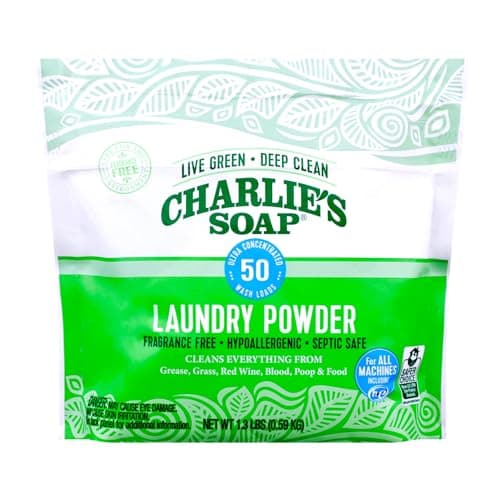
Detergent that rinses completely out
Charlie's Soap Laundry Powder
A four-ingredient, washing-soda-based powder that produces no suds and rinses clean -- which is the single property that matters for towels.
#ad How we are funded · Price as of November 3, 2026
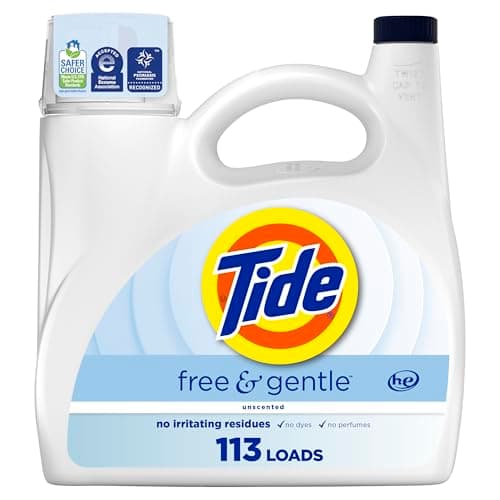
Cold-water washing
Tide Free & Gentle Liquid Laundry Detergent
A dye-free, perfume-free liquid with full Tide cleaning power -- the practical choice if your towel washes run cold.
#ad How we are funded · Price as of November 3, 2026
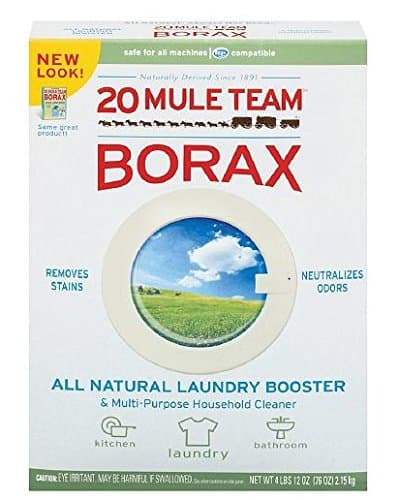
Musty smell, specifically
20 Mule Team Borax Laundry Booster
A natural mineral booster that neutralizes odor by cutting the oil and bacteria behind it -- the right tool for towels that smell, rather than towels that are gray.
#ad How we are funded · Price as of November 3, 2026
Signs you have left it too long
- A smell that appears when the towel gets wet but not when it is dry. That is bacteria rehydrating, and it means wash now.
- The towel feels slick rather than absorbent. That is build-up plus body oil, and it needs stripping rather than another normal wash.
- Gray patches on white towels that bleach does not shift in one pass.
- It takes two passes to dry yourself. The pile is loaded, not worn out. Why towels stop absorbing.
How often is only half the question. How to wash towels covers the other half: temperature, detergent dose, spin speed and drying, which is where most towels are actually ruined.
Frequently asked questions
How often should you wash bath towels?
After three uses, as long as the towel dries fully between uses. If it is still damp when you next pick it up, wash it after every use instead -- dampness decides this, not the calendar.
How often should you wash hand towels?
Every two to three days, and daily in a bathroom used by several people. Hand towels are used far more often than bath towels, by hands that are not always clean, and they rarely dry fully on a ring.
How often should you wash washcloths?
Every use. A washcloth is used on the face, stays balled up, and never dries, which is why it is the one item in the bathroom with no safe reuse interval.
Is it bad to reuse a towel?
No, if it dries. A clean body transfers very little to a towel; what makes a towel unpleasant is moisture. Reusing a fully dry towel is fine and reusing a damp one is not.
How often should you wash towels if you have no bathroom window?
Every use or every second use. Without ventilation the towel never finishes drying, which means the usual three-use interval does not apply no matter how clean you are.
Should towels be washed separately?
Yes. Wash towels on their own -- not with clothes, and never with bath mats or anything rubber-backed. Towels shed lint and need a different dose and temperature from clothing.