Terry & Tub is reader-funded. Every buy button here goes to Amazon and earns us a commission at no extra cost to you. Brands we cannot earn from are reviewed anyway when they are the right answer, with a citation instead of a buy button. Full disclosure.
Wash towels at 104F (40C) with half the detergent dose on the bottle, no fabric softener, on a cotton cycle with the longest spin your machine offers, then dry them completely. Go up to 140F (60C) for white towels once a month with oxygen bleach, and stay at 104F the rest of the time -- hotter every week shortens a towel's life without getting it cleaner.
Almost everything that goes wrong with towels goes wrong in the wash, and the single commonest cause is the one nobody suspects: too much detergent. The dose on the bottle is set for a full load of soiled clothing in hard water, and towels are neither.
Surplus detergent does not rinse out of terry. It sits in the loops, where it attracts soil, holds moisture, blocks absorbency and eventually smells. A towel in that state feels slick, dries slowly and looks gray, which is exactly what a worn-out towel feels like -- and it is not worn out at all. Why your towels stopped absorbing.
The five-step load
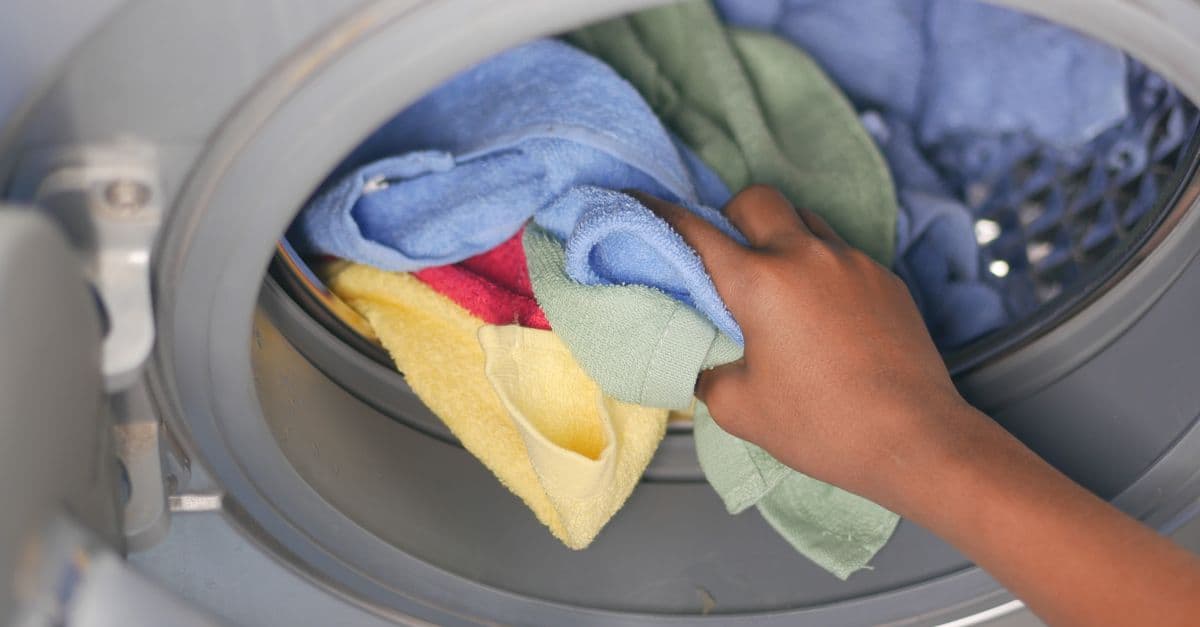
- Load towels only, to about three-quarters full. No clothing, no zips, no hooks. Towels need room to tumble or the detergent never rinses clear, and a zip finds a loop every time.
- Use half the detergent dose on the bottle. Half. If your towels currently smell or feel slick, use a third for the next few loads until they come back.
- Set 104F (40C) on a cotton cycle. Warm enough to dissolve body oils, cool enough that it is not aging the cotton every week.
- Pick the longest spin the machine offers. Water the machine removes is water the dryer or the rail does not have to. This is the most underused setting on a washing machine.
- Dry completely, straight away. Not 90%. Not tomorrow. A towel folded damp is where mildew, smell and gray start. Why towels smell and how to fix it.
Cold or hot? The temperature table
The cold-wash advice that is correct for clothing is only half correct for towels. Towels carry body oils and skin, and oils need some heat to come off the fiber.
| Temperature | Use it for | Notes |
|---|---|---|
| Cold, 86F / 30C | Colored towels you are protecting from fading | Needs a detergent formulated for cold; oils will build up over time |
| Warm, 104F / 40C | The default, every ordinary load | Removes body oils, does not age the cotton quickly |
| Hot, 140F / 60C | Whites monthly, plus illness in the house | Use with oxygen bleach; weekly at this temperature shortens towel life |
| Very hot, 194F / 90C | Almost never at home | A commercial laundry temperature. It damages elastic, trims and hems |
If you only remember one line of that table: 104F every week, 140F once a month on whites. That combination is what keeps towels both clean and long-lived, and it is close to what a well-run hotel laundry does. The hotel laundry method in full.
How much detergent, actually
By volume, roughly half the bottle's stated dose for a normal towel load in soft or moderately hard water. In genuinely hard water you need the full dose of detergent plus a water softener rather than more detergent on its own, because the detergent is being consumed by the minerals rather than cleaning the towels. Hard water and towels.
Powder is easier to get right than liquid, because you can see the quantity. Liquid pods are the hardest, because the dose is fixed at one load of dirty clothing and you cannot halve it.
Washing towels with bleach
Use oxygen bleach -- sodium percarbonate -- and not chlorine. Oxygen bleach whitens, deodorizes and lifts body soil without yellowing cotton or attacking hem stitching, and it is safe on colors as well as whites.
Chlorine bleach whitens faster and then does two things you do not want: it yellows cotton cumulatively, and it weakens the thread in the hems, which is the seam that fails first on nearly every towel. Commercial laundries use oxygen bleach for exactly this reason. Oxygen versus chlorine, in detail.
Drying
- Tumble on medium, not high. High heat makes cotton brittle at the fold lines, which is where towels thin first.
- Take them out while barely warm, not bone-hard. Over-drying is how a soft towel becomes a crisp one.
- On a rail, spread full width. A towel folded over a rail or a hook exposes a quarter of its surface and takes four times as long.
- Never put a towel away damp. This is the single rule that prevents the smell, the gray and most of the absorbency loss.
- Skip dryer balls if you like, but skip dryer sheets always. Sheets are fabric softener in another format.
What we would wash towels with
Three products cover the whole routine: a mild detergent for the weekly load, a residue-free powder if your towels are already built up, and an oxygen bleach for the monthly hot wash on whites.
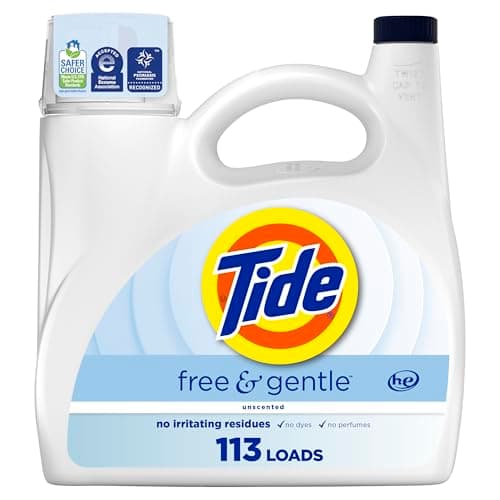
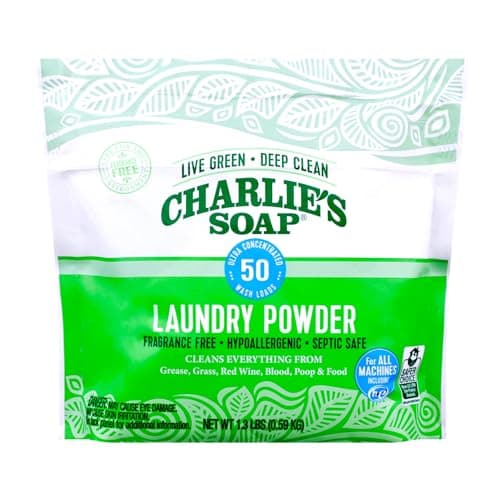
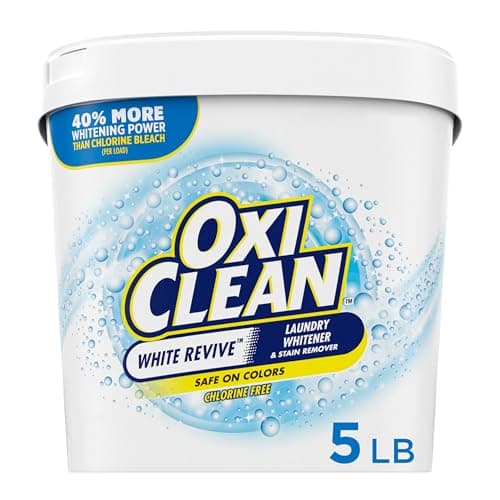
Tide Free & Gentle is a fragrance-free, dye-free liquid with a hypoallergenic formulation -- the sensible default for warm and cold weekly washing. Charlie's Soap Laundry Powder is a four-ingredient washing-soda-based powder, EPA Safer Choice certified, dosed at one tablespoon per load, and it is the one we reach for when the problem is residue rather than dirt. OxiClean White Revive is a sodium-percarbonate oxygen bleach for the monthly hot soak, safe on colors as well as whites.
The three products that cover a towel-washing routine: one weekly detergent, one that rinses completely out, and one monthly oxygen bleach.
Cold-water washing
Tide Free & Gentle Liquid Laundry Detergent
A dye-free, perfume-free liquid with full Tide cleaning power -- the practical choice if your towel washes run cold.
#ad How we are funded · Price as of November 3, 2026
Detergent that rinses completely out
Charlie's Soap Laundry Powder
A four-ingredient, washing-soda-based powder that produces no suds and rinses clean -- which is the single property that matters for towels.
#ad How we are funded · Price as of November 3, 2026
Keeping white towels white
OxiClean White Revive Laundry Whitener
An oxygen-bleach whitener the brand claims whitens 40% better per load than chlorine bleach -- and, unlike chlorine, it does not attack the cotton.
#ad How we are funded · Price as of November 3, 2026
The full comparison, including what we would not use, is in the best detergent for towels.
Special cases
- Brand-new towels. Wash alone first, with no detergent, to strip the sizing finish they ship with. The first wash explained.
- Turkish flat-weave towels. Warm, no softener, line dry. Tumble drying shrinks the weave and breaks the tassels. How to wash Turkish towels.
- Bathrobes. Wash alone, tie the belt first so it does not pull the loops. How to wash a bathrobe.
- Bath mats. Separately from towels, always -- the backing sheds and the grit is abrasive. How to wash a bath mat.
- Towels that already smell or feel slick. Normal washing will not fix them. Strip them once, then start this routine. How to strip towels.
The five mistakes that ruin towels
- Full-dose detergent, every wash. The commonest, and the one that causes the other four to look like wear.
- Fabric softener or dryer sheets. Film on the fiber, no absorbency.
- Overloading the machine. Nothing rinses.
- Washing towels with clothing. Zips pull loops and lint transfers both ways.
- Putting towels away at 90% dry. Mildew, smell, gray.
Fix those five and most towels last twice as long as people expect them to -- which is the whole argument of how often to replace towels.
If what you actually want is which buttons to press on your own machine, the cycle and temperature settings for towels is the shorter answer -- including whether towels count as delicates or as a bulky load, which they do not.
Frequently asked questions
How do you wash towels properly?
Towels only, machine three-quarters full, half the detergent dose on the bottle, no fabric softener, 104F on a cotton cycle, the longest spin available, then dried completely. Add oxygen bleach and go to 140F once a month on whites.
Should towels be washed in hot or cold water?
Warm, 104F (40C), for ordinary loads. Towels carry body oils and oils need some heat to release, so a cold wash lets them build up over time. Reserve 140F for a monthly whites wash rather than using it weekly.
How much detergent should you use for towels?
About half the dose printed on the bottle. The stated dose assumes a full load of soiled clothing, and the surplus does not rinse out of terry -- it sits in the loops, holds soil and moisture, and blocks absorbency.
Can you wash towels with clothes?
You can, and it is a bad idea in both directions. Zips, hooks and clasps pull terry loops, and towels shed lint onto clothing while clothing dye transfers to towels. Wash towels as their own load.
Why should you not use fabric softener on towels?
Softener works by leaving a thin waxy film on the fiber, and that film is water-repellent. Since absorbency is the only job a towel has, softener directly undoes it. Dryer sheets do the same thing.
Can you use bleach on towels?
Use oxygen bleach rather than chlorine. Oxygen bleach whitens and deodorizes without yellowing cotton or weakening hem stitching, and it is safe on colors. Chlorine bleach does both of those harms cumulatively.
How do you make towels soft again after washing?
Halve the detergent, drop softener entirely, use a long spin and dry fully on medium heat. If they are already slick or smelling, a one-off strip wash in washing soda and oxygen bleach clears the residue first -- normal washing will not.
What cycle should you wash towels on?
A cotton or towels cycle, which runs a longer wash and a higher spin than a synthetics cycle. The long spin matters most: water the machine removes is water that does not have to evaporate out of the towel afterwards.