Terry & Tub is reader-funded. Every buy button here goes to Amazon and earns us a commission at no extra cost to you. Brands we cannot earn from are reviewed anyway when they are the right answer, with a citation instead of a buy button. Full disclosure.
Wash new towels before first use: one hot wash on their own with a cup of white vinegar and no detergent, then a second normal warm wash with half your usual detergent dose and no fabric softener. The first wash removes the silicone and starch finish the mill applies, which is what stops a brand-new towel absorbing.
Almost everybody has had the experience of buying expensive towels and finding them disappointing. They push water around instead of soaking it up, they shed lint over everything, and they feel oddly slippery.
None of that is a bad towel. It is a towel still wearing its factory finish.
Why a new towel does not absorb
Towels come off the loom and go through a finishing process before they are packed. Softeners, silicone emulsions and starches are applied for three commercial reasons that have nothing to do with how the towel performs in your bathroom: they make the pile look plump on a shelf, they make it feel soft through packaging, and they help the cloth run through the cutting and sewing machinery.
Every one of those agents is hydrophobic or film-forming. They sit on the outside of the loops, which is exactly where water needs to make contact. So a brand-new towel is, briefly, a water-repellent object.
This is the same mechanism as the one that ruins older towels, just applied at the factory instead of by you. Why towels stop absorbing covers the long-term version.
The first-wash routine
- Wash the new towels on their own. Not with clothes, not with your existing towels. New towels shed a lot of lint on the first two cycles and it transfers.
- Hot wash, one cup of white vinegar in the drum, no detergent. The acid cuts the silicone and starch finish, and detergent in this load would just react with it rather than remove it.
- Second wash: warm, half your normal detergent dose, no vinegar. This clears what the first wash loosened and anything the vinegar left.
- No fabric softener. Not now, not ever. Adding softener to a new towel re-coats the fiber you just spent two cycles uncovering.
- Tumble dry on medium, or line dry and finish in the dryer for ten minutes. The tumbling is what fluffs the pile open after the finish comes off.
Two cycles is the honest answer for most towels. A very heavy or very plush towel can need three before it is absorbing at full rate, and a zero-twist towel is usually quickest because the open loops have less finish clinging to them.
How to stop the lint
New towels shed. Some of it is loose fiber cut during manufacture and some is short fiber working its way out of the yarn, and there is no way to skip it -- but there are three ways to get through it faster.
- Wash them alone for the first two or three cycles. This is the whole trick. Lint on a new towel is harmless; lint on a black jumper is not.
- Clean the dryer filter between loads, not after. A loaded filter stops the dryer working and prolongs the drying time that the towel needs.
- Shake each towel out before it goes in the dryer. A surprising amount comes off dry.
- Expect it to stop by about wash four. A towel still shedding heavily at wash ten is short-staple cotton, and that is a purchasing fault rather than a washing one. Cotton grades explained.
Should you wash new towels hot?
For the first wash, yes -- hot water is what mobilizes a silicone finish, and this is the one wash where temperature is doing real work. After that, warm is the routine temperature for towels, with an occasional hot wash when something has stayed damp.
Do expect some shrinkage on the first two washes. A cotton towel loses roughly 3 to 5% and then stops, which is why a towel measured at 27 x 54 in off the shelf will settle slightly smaller. If you are buying for a specific rail or ring, allow for it. Towel sizes.
The two products for the job
Arm & Hammer Super Washing Soda is worth having for the first hot wash in a hard-water area -- sodium carbonate keeps the dissolved finish from re-depositing on the pile as the water cools. In soft water, vinegar alone is enough. Hard water and towels.
Charlie's Soap laundry powder is the detergent for wash two and everything after: four ingredients, washing-soda based, dosed at a tablespoon, and formulated to rinse completely out of a pile. Starting a new towel's life on a detergent that leaves no residue is the cheapest thing you can do for its lifespan. The full detergent roundup.
What to have in the cupboard before the towels arrive -- plus the towel we would be breaking in, if you have not ordered yet.
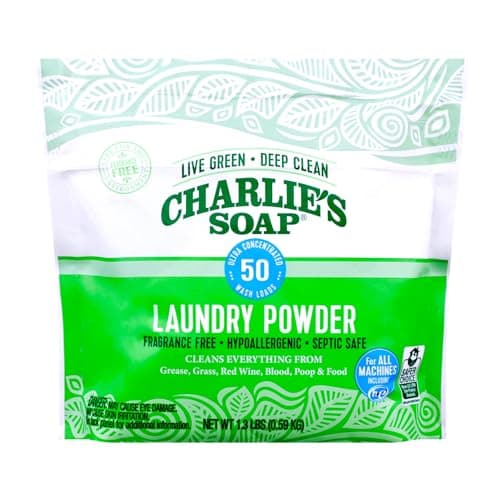
Detergent that rinses completely out
Charlie's Soap Laundry Powder
A four-ingredient, washing-soda-based powder that produces no suds and rinses clean -- which is the single property that matters for towels.
#ad How we are funded · Price as of November 3, 2026
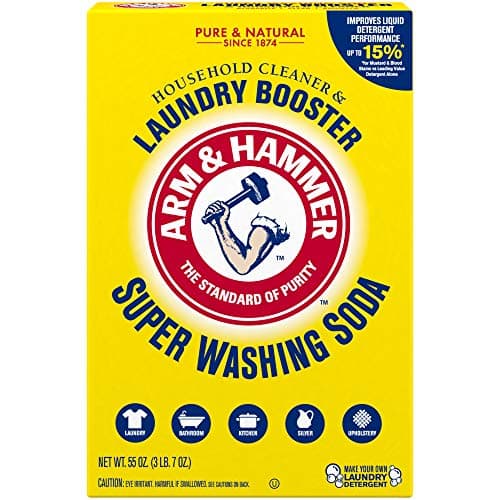
Hard water and greasy build-up
Arm & Hammer Super Washing Soda
Sodium carbonate -- a stronger alkali than baking soda that boosts detergent performance and is the standard answer for greasy, hard-water-stiffened towels.
#ad How we are funded · Price as of November 3, 2026
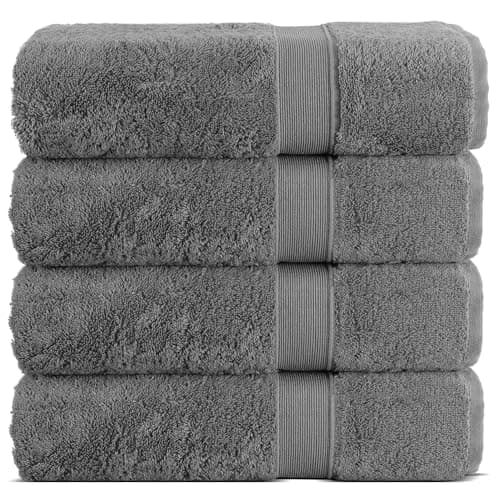
Hotel feel at a hotel-supply price
Chakir Turkish Linens Hotel & Spa Bath Towel
A 550-600 GSM long-staple Turkish cotton towel built to the hotel-and-spa spec, which is exactly the crisp, medium-weight towel most people are actually trying to buy.
What about Turkish flat-woven towels?
A new peshtemal behaves differently and needs a different first wash: it arrives stiff with natural cotton wax rather than slippery with silicone, and the break-in takes several washes rather than two. It is also the one towel where that stiffness is expected and correct. How to wash and break in a Turkish towel.
Everything else -- terry towels, waffle towels, bath sheets, robes, hand towels and washcloths -- takes the routine above. After that, the ongoing method is what keeps them working.
Frequently asked questions
Should you wash new towels before using them?
Yes. New towels carry a silicone and starch finish applied at the mill to make them look plump on a shelf, and that finish repels water. Until it is washed off, a brand-new towel genuinely does not absorb properly.
How do you wash new towels for the first time?
One hot wash on their own with a cup of white vinegar and no detergent, then a second warm wash with half your usual detergent dose. No fabric softener at any point, and tumble dry on medium to open the pile.
Why do new towels not absorb water?
Because of the finishing agents applied during manufacture -- softeners, silicone emulsions and starch. They sit on the outside of the loops, which is exactly where water needs to make contact.
How do you stop new towels shedding lint?
Wash them on their own for the first two or three cycles, shake them out before they go in the dryer, and clean the dryer filter between loads. Shedding should largely stop by about the fourth wash.
Can you use vinegar on new towels?
Yes, and this is the best use for it in towel care: one cup in a hot first wash with no detergent, to cut the factory finish. We would not run vinegar as a weekly habit.
Do new towels shrink?
Cotton towels lose about 3 to 5% on the first two washes and then stop. Allow for it if you are buying to fit a particular rail, ring or cupboard.