
Terry & Tub is reader-funded. Every buy button here goes to Amazon and earns us a commission at no extra cost to you. Brands we cannot earn from are reviewed anyway when they are the right answer, with a citation instead of a buy button. Full disclosure.
Towels go on the normal or cottons cycle, at warm rather than hot -- about 104-120 F / 40-49 C -- with the highest spin speed the machine offers and an extra rinse if one is available. They are not delicates and should never go on a delicate cycle, which is too short and too gentle to rinse detergent out of a thick pile. They are not bulky items either, unless you are washing a bath sheet or a bath mat. Use roughly half the detergent the bottle recommends and no fabric softener at all.
Washing machines have between eight and twenty programs and roughly four of them do anything different. For towels the settings that matter are temperature, spin speed, rinse count and load size -- in that order. The cycle name is mostly a packaging of those four.
Temperature: warm, not hot
Warm is the right default and it is lower than most people assume. Around 104-120 F is hot enough to dissolve detergent properly and lift body oils out of the pile, and cool enough not to do the damage that hot water does.
What hot water does: it sets protein stains rather than removing them, it accelerates fading on colored towels, it breaks down elastane and rubber in anything blended or backed, and over time it makes cotton brittle, which is what causes the thinning at the fold lines that ends a towel's life. The hospitality industry does wash hotter than this -- and replaces its towels on a schedule, which you do not.
Cold is fine for lightly used towels if the detergent is formulated for it, and it is the better choice for dark towels and anything with a bonded backing. The one thing cold does badly is removing body oil, which is the thing that eventually makes towels smell. How often to wash towels is the companion question to this one.
Cycle: normal or cottons, never delicate
Towels want agitation. A thick terry pile holds detergent and dirt deep in the loops, and the mechanical action of a full-length cottons cycle is what moves water through it. A delicate cycle is short, low-agitation and low-spin, which on a towel means detergent stays in the fibers -- and detergent left in a towel is the single commonest cause of a towel that stops absorbing.
The heavy duty or bedding cycle is longer and more aggressive again. It is worth using for bath mats, bath sheets and anything genuinely filthy, and it is unnecessary wear for everyday towels.
| Item | Cycle | Temperature | Spin | Notes |
|---|---|---|---|---|
| Bath towels | Normal / cottons | Warm | Highest | Extra rinse if available |
| Bath sheets | Normal / cottons | Warm | Highest | Fewer per load -- they hold a lot of water |
| Hand towels and washcloths | Normal / cottons | Warm | Highest | Wash with bath towels, not with clothes |
| Bath mats, fabric | Normal, or bulky if backed | Cool to warm | Medium | Never hot -- heat destroys a bonded backing |
| Turkish flat-weave towels | Normal / cottons | Cool to warm | Medium | Line dry if you can |
| Robes | Normal / cottons | Warm | Medium | Tie the belt through a sleeve so it does not tangle |
Spin speed: as high as the machine goes
This is the setting people most often leave on a low default and it is the one with the clearest benefit. A higher spin takes more water out of the towel before it reaches the dryer, which means a shorter, cooler dry cycle. Heat is what degrades cotton, so a high spin is a direct trade of thirty seconds of noise for months of towel life.
The exception is anything with a bonded backing. A bath mat on a maximum spin gets slammed against the drum and the backing crazes. Medium is the right setting there.
Rinse: the setting that matters most and is used least
Most towel problems are detergent problems. A thick pile holds suds, and residue left in the fiber attracts dirt, blocks absorbency and gives bacteria something to live on -- which is what the musty smell is. An extra rinse is the direct fix and it costs nothing but water.
The other half of this is using less detergent in the first place. Dose recommendations on the bottle are set for heavily soiled laundry in hard water, and towels are neither. Roughly half the stated amount is right for a normal towel load; use the full dose only if your water is genuinely hard.
Three products that make the cycle above work: a detergent that rinses out cleanly, a cold-water option, and the additive for hard water.
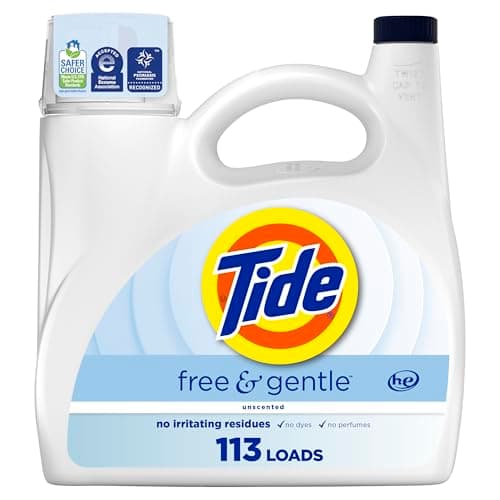
Cold-water washing
Tide Free & Gentle Liquid Laundry Detergent
A dye-free, perfume-free liquid with full Tide cleaning power -- the practical choice if your towel washes run cold.
#ad How we are funded · Price as of November 3, 2026
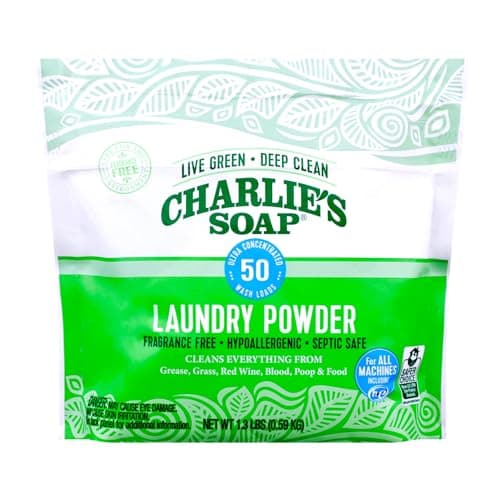
Detergent that rinses completely out
Charlie's Soap Laundry Powder
A four-ingredient, washing-soda-based powder that produces no suds and rinses clean -- which is the single property that matters for towels.
#ad How we are funded · Price as of November 3, 2026
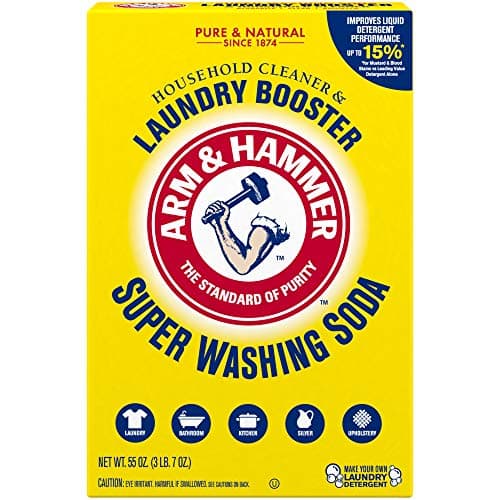
Hard water and greasy build-up
Arm & Hammer Super Washing Soda
Sodium carbonate -- a stronger alkali than baking soda that boosts detergent performance and is the standard answer for greasy, hard-water-stiffened towels.
#ad How we are funded · Price as of November 3, 2026
Are towels delicates? Are they bulky?
Neither, as a rule. Towels are the opposite of delicate -- a cotton terry towel is one of the most robust things in a domestic wash, and treating it gently is what leaves detergent in it. Put them on the standard cottons cycle.
Bulky is a size and balance program rather than a fabric one. It is designed for duvets and pillows, which float and trap air. A standard bath towel does not need it. A bath sheet, a bath mat or a heavy robe can benefit, mostly because the cycle manages load balance better when one heavy item is soaking up most of the water.
The more useful rule is about load size: fill the drum about three-quarters full, never to the top. Towels need room to move, and a packed drum is a drum where water and detergent cannot circulate -- which is the same problem as a delicate cycle, arrived at differently.
The three habits that matter more than any setting
- Wash towels alone. Never with clothing. Towels shed onto everything and pick up lint and zips from everything. This is also why the lint filter should be cleared between loads.
- No fabric softener, ever. Softener is a coating. It makes a towel feel smoother in week one and makes it water-repellent by month six, which is the exact opposite of what a towel is for. How to soften towels properly does it without the coating.
- Get them out of the machine immediately. A full load of damp towels sitting in a drum for six hours is where the sour smell comes from, and no cycle setting prevents it.
And dry on medium rather than high. A high dryer setting feels efficient and is the main cause of brittle, thin cotton -- which is a slower and more expensive problem than a slightly longer cycle. The hotel laundry method puts the whole routine together.
Frequently asked questions
What cycle should towels be washed on?
Normal or cottons, at warm -- around 104-120 F -- with the highest spin speed the machine offers and an extra rinse if one is available. The full-length cottons cycle is what moves water through a thick pile; a short gentle cycle leaves detergent behind in it.
Are towels considered delicates?
No. Cotton terry is one of the most robust fabrics in a domestic wash, and the delicate cycle's low agitation and low spin are exactly wrong for it -- detergent stays in the pile, which is the commonest cause of towels that stop absorbing.
Are towels a bulky item?
Bath towels are not. Bath sheets, bath mats and heavy robes can benefit from the bulky or bedding cycle, mostly because it handles load balance better when one heavy item soaks up most of the water. The bulky program is designed for duvets and pillows.
Should towels be washed in hot water?
Warm is better for routine washing. Hot water sets protein stains, fades colors, destroys bonded backings and makes cotton brittle over time, which is what causes thinning at the fold lines. Save hot water plus oxygen bleach for the occasional reset when towels have gone sour.
What spin speed should towels be washed at?
The highest the machine offers, with one exception. More water removed in the spin means a shorter, cooler dryer cycle, and heat is what degrades cotton. The exception is anything with a bonded rubber backing, like a bath mat, where a maximum spin crazes the backing -- use medium there.
Should you use the extra rinse setting for towels?
Yes, whenever the machine has one. A thick pile holds suds, and detergent left in the fiber blocks absorbency and feeds the bacteria that cause the musty smell. Pair it with using about half the dose on the detergent bottle.
Can you wash towels with clothes?
You can, and you should not. Towels shed onto clothing and clothing sheds lint, buttons and zips into towel pile. The loads also want different settings: towels want a high spin and a warm wash, and most clothing does not.