Terry & Tub is reader-funded. Every buy button here goes to Amazon and earns us a commission at no extra cost to you. Brands we cannot earn from are reviewed anyway when they are the right answer, with a citation instead of a buy button. Full disclosure.
Orange marks on towels have four common causes, and they need different answers. Benzoyl peroxide from acne treatment is the most common by far -- it is a bleaching agent, so it does not stain the towel, it removes the dye and leaves an orange or pale patch that cannot be reversed. Skin products do the same thing: self-tanner, some sunscreens and leave-in hair products oxidize into orange-brown marks. Iron in the water supply deposits as rust-colored patches across whole loads. Actual rust comes from the machine or a radiator. Only the last three can be removed; benzoyl peroxide damage is permanent.
Working out which one you have takes about a minute, and it is worth doing before you try anything, because the single commonest mistake here -- reaching for chlorine bleach -- makes two of the four noticeably worse.
Telling the four apart
| Pattern | Cause | Removable? |
|---|---|---|
| Pale orange or white patches, on dark towels, in the shape of contact | Benzoyl peroxide from acne treatment | No -- the dye is gone |
| Orange-brown marks on face towels and washcloths | Self-tanner, sunscreen, hair products oxidizing | Usually yes |
| An overall rust tint across a whole load, worse on whites | Iron in the water supply | Yes, with the right chemistry |
| Hard-edged rust spots in random places | Rust from the machine, a radiator or a hanging rail | Yes, if you fix the source |
| Yellow-orange developing slowly over months | Detergent and body-oil build-up | Yes -- this is a strip wash job |
Benzoyl peroxide: the one that cannot be fixed
Benzoyl peroxide is an oxidizing agent. It is in acne washes, spot treatments and some medicated body washes, and it bleaches textile dye on contact. The towel is not stained -- the color has been chemically stripped out of it, which is why the mark is lighter than the surrounding cloth rather than darker.
Nothing brings it back. No stain remover, no dye, no wash. The marks also appear hours or days after the contact, which is why people often blame the laundry rather than the bathroom cabinet.
The only real answer is to keep the two apart. In practice that means white towels for anyone using benzoyl peroxide -- they bleach invisibly, and white can be oxygen-bleached back to bright white indefinitely. Keeping white towels white is the routine that makes that work. Keep a separate white face towel and washcloth specifically for the face, and let the medication dry fully on the skin before anything touches it.
Skin and hair products that oxidize
Self-tanner is the clearest example -- the active ingredient browns on contact with protein, and it does the same thing to cotton. Some mineral sunscreens, leave-in conditioners and oils also oxidize to an orange-brown over time, which is why a towel can look clean coming out of the wash and develop marks sitting in a cupboard.
These are removable, because the color was added rather than removed. The method is an oxygen bleach soak -- warm water, oxygen bleach fully dissolved first, four to six hours, then a normal warm wash. Repeat once if it has faded but not gone. Do not use chlorine bleach: on an oxidized organic mark it frequently sets the color and turns it yellow permanently.
Iron in the water
Well water and some municipal supplies carry dissolved iron. It deposits in fabric during the wash and oxidizes to rust color, and the giveaway is that it affects whole loads evenly rather than appearing as discrete marks -- whites go dingy orange-tan over months, and the inside of the machine often shows the same tint.
Chlorine bleach is exactly wrong here. Chlorine oxidizes iron and sets it, which is the main way people turn a faint tint into a permanent orange one. Use an oxygen-based whitener instead, and add washing soda to the wash to keep minerals in suspension so they rinse away rather than depositing.
If the supply is genuinely iron-heavy, laundry is the symptom rather than the problem and a whole-house filter is the fix. Hard water and towels covers the broader mineral issue, which usually arrives alongside it.
Three products that handle the removable causes: an oxygen whitener, a fragrance-free alternative, and the mineral additive for hard or iron-heavy water.
Keeping white towels white
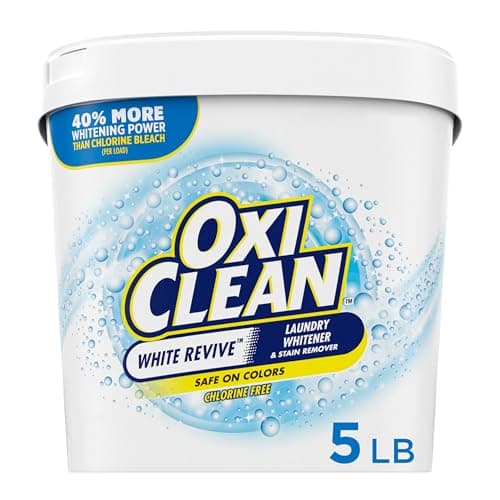
OxiClean White Revive Laundry Whitener
An oxygen-bleach whitener the brand claims whitens 40% better per load than chlorine bleach -- and, unlike chlorine, it does not attack the cotton.
#ad How we are funded · Price as of November 3, 2026
Fragrance-free oxygen bleach
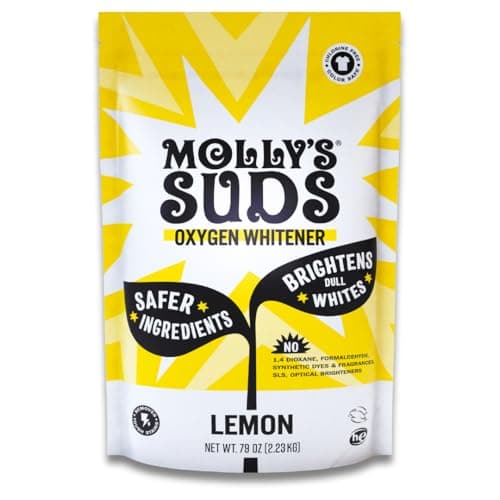
Molly's Suds Oxygen Whitener
The same oxygen-bleach chemistry without added fragrance, for households where scented laundry products are a problem.
Hard water and greasy build-up
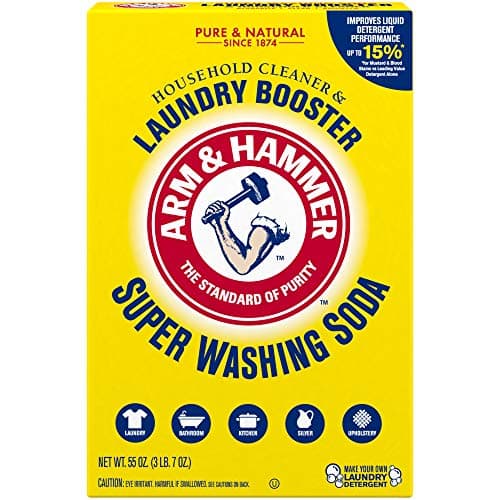
Arm & Hammer Super Washing Soda
Sodium carbonate -- a stronger alkali than baking soda that boosts detergent performance and is the standard answer for greasy, hard-water-stiffened towels.
#ad How we are funded · Price as of November 3, 2026
Rust from the machine or the rail
Hard-edged rust spots in random positions usually mean metal. Common sources: a chipped drum, a worn door seal, a rusting radiator or heated rail that towels are draped over, a metal hook, or something metal left in a pocket in a mixed load.
Find the source first, because removing the stain without it is a weekly chore. Run the machine empty on a hot cycle with washing soda and look at what comes out; check the rail and the hooks; check whether the marks always land in the same place on the towel, which points at how it hangs.
Once the source is dealt with, an oxygen soak lifts most rust marks from cotton. Again, no chlorine bleach -- it sets rust.
The slow yellow-orange that is really build-up
Towels that have gradually gone dingy and slightly orange over a year, with no distinct marks, usually have a build-up problem rather than a stain problem. Body oils, excess detergent, fabric softener and hard-water minerals accumulate in the pile and oxidize together into a yellowish cast.
The tell is that the towels also feel different -- less absorbent, slower to dry, slightly waxy. That is a strip wash, not a stain treatment. How to strip towels, step by step is the procedure, and the result is usually startling enough that people assume the towels were replaced.
The short version
- Never use chlorine bleach on an orange mark. It sets iron and rust, and it yellows oxidized organic stains. Oxygen bleach is the right chemistry for all three of the removable causes.
- Buy white towels if anyone in the house uses benzoyl peroxide. It is the only solution, because the damage is bleaching rather than staining.
- Dissolve oxygen bleach in warm water before the laundry goes in. Undissolved granules sitting against fabric are how people create a second problem.
- Fix the source before treating the symptom. Iron in the water and rust from a rail will both come straight back otherwise.
- If the towels also feel waxy or slow to dry, strip them first. Half the discoloration people treat as a stain is build-up.
Frequently asked questions
Why do my towels get orange stains?
Four common causes: benzoyl peroxide from acne treatment, which bleaches the dye out and leaves a permanent pale orange patch; skin and hair products like self-tanner oxidizing to orange-brown; iron in the water supply depositing across whole loads; and rust from the machine, a rail or a radiator. Only the last three can be removed.
How do you get benzoyl peroxide stains out of towels?
You cannot. Benzoyl peroxide is an oxidizing agent that strips the dye out of the fabric rather than adding color to it, so there is nothing to lift. The practical answer is white towels for anyone using it -- white bleaches invisibly and can be oxygen-bleached back to bright white indefinitely.
Why are my white towels turning orange?
Most often iron in the water supply, which deposits during the wash and oxidizes to a rust tint across whole loads rather than as distinct marks. Use an oxygen whitener and add washing soda to keep minerals in suspension. Never use chlorine bleach -- it oxidizes iron and sets the color permanently.
Can you bleach orange stains out of towels?
Not with chlorine bleach, which makes iron, rust and oxidized organic stains worse. Oxygen bleach is the right chemistry: dissolve it in warm water first, soak for four to six hours, then wash warm as normal and repeat once if the mark has faded but not gone.
What causes pink or orange spots on dark towels?
Almost always benzoyl peroxide, from an acne wash, spot treatment or medicated body wash. The marks are lighter than the surrounding cloth because the dye has been chemically removed, and they often appear hours or days after the contact, which is why the wash usually gets the blame.
Why do towels go yellow-orange over time?
Gradual discoloration with no distinct marks is normally build-up rather than staining -- body oils, excess detergent, fabric softener and hard-water minerals accumulating in the pile and oxidizing together. The tell is that the towels also feel waxy and dry more slowly. A strip wash resets it.