Terry & Tub is reader-funded. Every buy button here goes to Amazon and earns us a commission at no extra cost to you. Brands we cannot earn from are reviewed anyway when they are the right answer, with a citation instead of a buy button. Full disclosure.
Bath mats get moldy because they stay damp. Mold and mildew need moisture, warmth and still air, and a bath mat lying flat on a bathroom floor supplies all three: it is soaked twice a day, it is pressed against a cold surface so the underside never gets airflow, and the room it lives in is the most humid in the house. The fix is almost never a stronger cleaner. It is a mat that dries -- either a stone mat that dries in under a minute, a thin quick-dry cotton rug, or the simple habit of hanging the mat up after the last shower.
The reason this question comes up so often -- bath mat that does not mold, bath mat that does not get gross, bath mat that does not smell -- is that people correctly suspect it is the mat's fault rather than their cleaning. They are right. Most bath mats are built in a way that makes drying structurally impossible.
What is actually growing, and where
Three different things get called mold on a bath mat, and they have different fixes.
- Mildew in the pile. Surface growth in damp fiber. It is what the sour, musty smell is, and it usually appears as a gray cast rather than distinct spots. This is the reversible one.
- Black spotting on the backing. Mold growing in the trapped layer between a rubber or latex backing and the floor. This is where it is almost always worst, because that surface never sees air at all.
- A perishing backing. Not mold. Rubber and latex backings break down with age and heat, and a crazing, flaking backing looks like black mottling and sheds black crumbs. No amount of washing fixes this -- the mat is finished.
Telling the third apart from the first two is worth thirty seconds, because it decides whether you clean or replace. Rub a spot with a damp cloth: mildew smears and lightens, a perishing backing crumbles.
Why most bath mats cannot dry
Four design decisions, each sensible on its own, combine into a mat that stays wet:
- Deep pile. Depth is what makes a mat feel good underfoot, and it is also a reservoir. A deep chenille pile holds water for hours after the surface feels dry.
- A bonded backing. Non-slip backings are genuinely useful, and they also seal one entire face of the mat so water can only leave upward -- through the pile that is already saturated.
- Lying flat on cold tile. The mat is pressed against the coldest surface in the room, which is where condensation forms rather than evaporates.
- A bathroom with poor ventilation. Most bathrooms change their air far too slowly after a shower. The mat is the last thing in the room to dry even when everything else does.
That is why the single most effective change costs nothing: hang the mat after the last shower of the day. Over the tub edge, over a rail, over the shower screen -- anywhere with air on both faces. A mat that gets eight hours of two-sided airflow does not go moldy.
Three mats chosen on the only thing that prevents mold -- how fast they dry, and whether they can be washed indefinitely.
The stone mat that started it
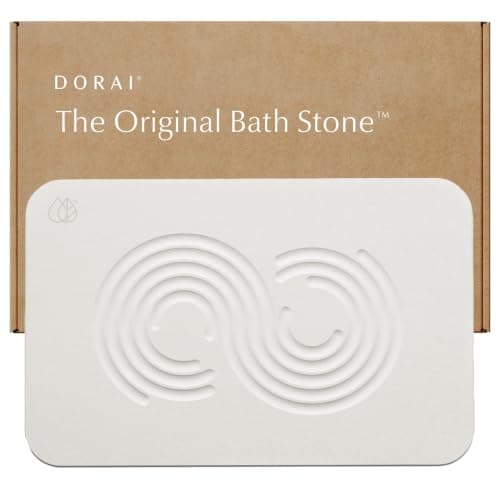
Dorai Home Stone Bath Mat
Diatomaceous earth and recycled paper, absorbing up to 150% of its own weight and evaporating it in seconds, on a rubberized non-slip base.
#ad How we are funded · Price as of November 3, 2026
Cotton that actually dries
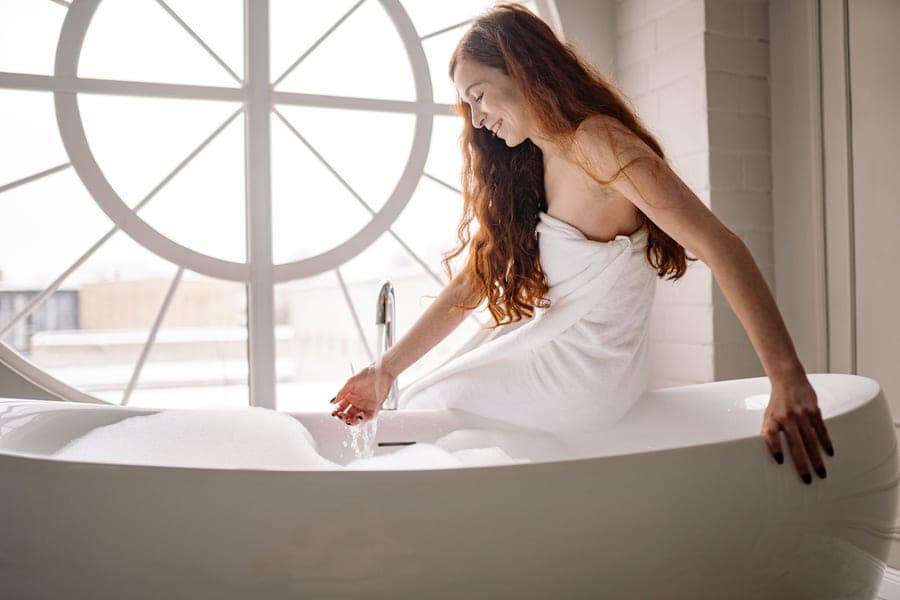
Green Earth Quick Dry Bath Rug
A cotton bath rug engineered around dry time rather than plushness, in sizes from 17 x 24 up to 30 x 50 in.
The best plain cotton bath rug
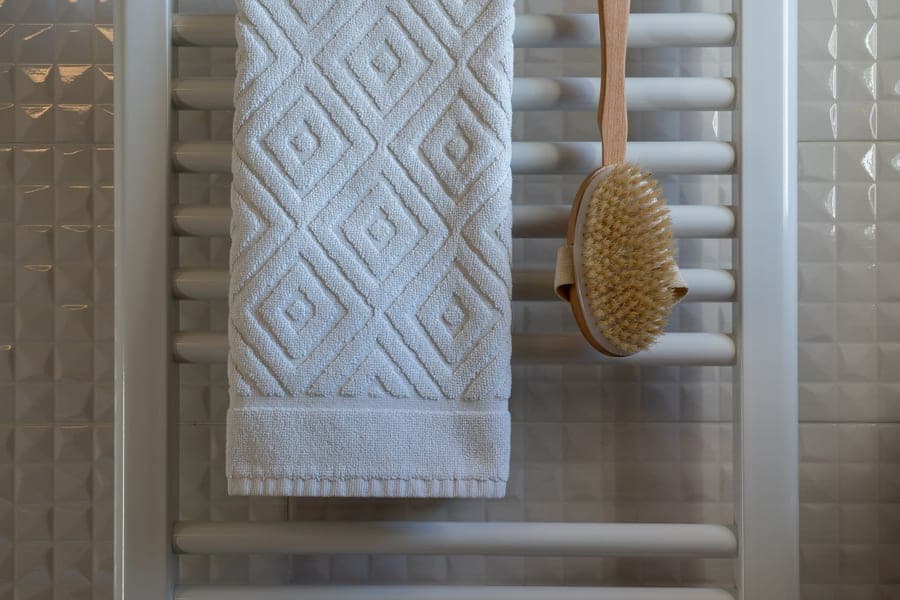
The Company Store Company Cotton Bath Rug
100% cotton across four sizes, with no rubber backing to disintegrate -- the reason a plain cotton rug still beats most engineered mats.
The constructions that do not develop the problem
Dorai's stone mat is diatomaceous earth and recycled paper: it absorbs up to 150% of its weight and evaporates it in seconds, so there is no persistent damp for anything to grow in. It never goes in a washing machine and cannot develop a sour smell. The trade is that it is cold and hard to stand on and will crack if dropped edge-first.
Green Earth's quick-dry rug is the fabric answer: thin cotton pile engineered around dry time rather than plushness, in sizes up to 30 x 50 in. It dries between showers instead of staying damp all day, which is the whole mechanism.
The Company Store's Company Cotton rug is the third approach -- 100% cotton with no rubber backing at all. Without a bonded layer there is no sealed face and no backing to perish, and it can be laundered at real temperatures indefinitely. It will slide on polished tile without a rug pad, which is the honest cost.
Stone versus cotton bath mats is the head-to-head if you are choosing between the first two approaches, and the quick-dry roundup covers the fabric options in full.
Getting mildew out of a mat you already own
- Check the care label for the backing first. Everything below assumes a cool or warm wash. Hot water destroys a bonded backing, which is how people turn a smelly mat into a shedding one.
- Soak it in oxygen bleach. Warm water, oxygen bleach dissolved first, four to six hours. Oxygen bleach kills mildew and lifts the staining without the fiber damage chlorine causes. Oxygen versus chlorine bleach explains why this is the right chemistry here.
- Wash it alone, warm, with detergent only. No softener, no dryer sheet. Softener is a coating, and a coating is what stops a mat drying.
- Add half a cup of washing soda if the water is hard. Hard water leaves mineral deposits that hold detergent residue, and residue holds damp. Hard water and towels applies identically to mats.
- Dry it completely before it goes back down. Low heat for a backed mat, a full cycle for cotton. A mat that goes back on the floor at 80% dry is back where it started by the weekend.
If the black marks do not lighten at all after an oxygen soak, they are probably not mildew. A perishing backing cannot be cleaned, and a mat shedding black crumbs into a washing machine is doing that to every load that follows.
The room, not the mat
If a replacement mat develops the same problem within a few months, the mat was never the variable. A bathroom that cannot dry a mat is a bathroom that is also not drying towels, which shows up as the same musty smell on every piece of cloth in the room -- why towels smell musty even when clean is the same mechanism in a different fabric.
- Run the extractor fan for twenty minutes after the shower, not two. Most of the moisture leaves the room after the shower ends, not during it.
- Leave the door open afterward if there is no fan. A closed bathroom holds its humidity for hours.
- Squeegee the shower walls. It sounds fussy and it removes a surprising share of the water that would otherwise evaporate into the room.
- Do not dry laundry in the bathroom. It is a common habit in small homes and it doubles the humidity load the room has to clear.
How often to wash a bath mat
Weekly for a fabric mat in a bathroom used daily, and more often for a long runner or a shared bathroom. That is more often than most people assume and it is the second-cheapest preventive measure after hanging it up.
How to wash a bath mat has the temperature and backing rules in full, and how often to replace a bath mat covers the point at which washing stops being the answer.
Frequently asked questions
Why does my bath mat get moldy?
Because it never fully dries. Mold needs moisture, warmth and still air, and a bath mat lying flat on a bathroom floor has all three -- it is soaked twice a day and its underside is pressed against cold tile where no air reaches it. The growth is nearly always on the face against the floor, not the face you stand on.
What bath mat does not get moldy?
A stone mat. Dorai's diatomaceous earth mat absorbs up to 150% of its weight and evaporates it in seconds, so there is never persistent damp for anything to grow in. Among fabric mats, a thin quick-dry cotton rug like Green Earth's or an unbacked cotton rug that can be laundered indefinitely are the next best answers.
How do you get mold out of a bath mat?
Soak it in warm water with oxygen bleach for four to six hours, then wash it alone on a warm cycle with detergent only -- no fabric softener. Add washing soda if your water is hard. Check the care label first: hot water destroys a bonded rubber backing, which turns a smelly mat into a shedding one.
Is the black stuff on my bath mat mold or a broken backing?
Rub a spot with a damp cloth. Mildew smears and lightens; a perishing rubber or latex backing crumbles and sheds black crumbs. A perishing backing cannot be cleaned and the mat should be replaced -- it will shed into every load that follows it through the machine.
Should you hang up a bath mat after a shower?
Yes, and it is the single most effective thing you can do. Hanging it over the tub edge, a rail or the shower screen gives air to both faces. A mat that gets eight hours of two-sided airflow does not go moldy; a mat left flat on tile never fully dries.
How often should you wash a bath mat?
Weekly for a fabric mat in a bathroom used every day, and more often for a long runner or a bathroom several people share. Wash it alone -- a wet mat is heavy, unbalances the load and transfers lint badly.
Does a non-slip backing make a bath mat more likely to go moldy?
Yes. A bonded backing seals one entire face, so water can only leave upward through pile that is already saturated. It is still worth having for grip, but it makes hanging the mat up after showers more important rather than less.