Terry & Tub is reader-funded. Every buy button here goes to Amazon and earns us a commission at no extra cost to you. Brands we cannot earn from are reviewed anyway when they are the right answer, with a citation instead of a buy button. Full disclosure.
Technically yes, and practically no. Every woven cloth has a thread count -- the number of warp and weft threads per square inch of the base fabric -- so a towel's backing cloth has one. But a towel's performance comes from the pile looped up out of that backing, and thread count does not measure the pile at all. The figures that do matter on a towel are GSM (weight per square meter), the cotton staple class, the weave and how the yarn was spun. A towel listing that leads with thread count is usually a listing with nothing better to say.
This is one of the most common crossovers in home textiles, and it is easy to see why. Thread count is the number everyone learned to shop sheets by, so it feels like the number you should shop towels by too. The two fabrics are built in fundamentally different ways.
What thread count measures, and why a towel breaks it
Thread count is the number of threads in one square inch of fabric, warp plus weft. On a bed sheet that is a reasonable proxy for quality, because a sheet is one flat layer of woven cloth and the thing you touch is the thing being counted. Finer yarn packs more threads in, and a smoother, denser surface is what people like about a good sheet.
A terry towel is not one layer. It is built on two warp systems at once: a ground warp held under tension, which is the backing cloth, and a pile warp fed in slack, which loops up to make the terry. Thread count can only sensibly be applied to the ground warp -- the part buried underneath, that you never touch and that does no absorbing.
So you can raise a towel's thread count without improving the towel at all. Weave the backing tighter, keep the pile exactly the same, and the number goes up while nothing about the way the towel dries you changes. You can also lower it and make a better towel by spending the cotton on longer, denser loops instead.
What to read on a towel listing instead
- GSM -- grams per square meter. The weight of cotton per unit area, counting the pile. 500-600 GSM is the band that feels substantial and still dries between showers; 700 is the top of what we will put in a daily bathroom; above 800 you are buying something that will be damp when you next need it. The full GSM guide sets out the bands.
- Staple class. Turkish, Egyptian, Supima, Pima, or simply long-staple. Longer fibers mean fewer loose ends per inch of yarn, so less lint, less pilling and much slower thinning at the fold lines. This is the single best predictor of how a towel looks in year five. Which cotton types are worth paying for goes through the grades.
- Weave. Classic terry, waffle, ribbed or flat-woven. This decides dry time, texture and how much yarn is exposed to snag or shed, and it changes the towel far more than a hundred grams either way.
- Spinning. Ring-spun, combed or zero-twist are all real manufacturing steps that cost money. Open-end spinning is the cheap one and is rarely named, because naming it would not help.
- Edge construction. Double-stitched, braided, hemstitched or a wide dobby border. The hem is where towels fail first, well before the pile gives up.
Those five, in that order, will tell you more about a towel than any single number can. A 550 GSM combed Turkish cotton towel with double-stitched edges beats a 700 GSM unspecified-cotton towel on lifespan, lint and how it feels in year three -- and it dries faster.
Three towels that publish the specifications that actually predict performance, rather than a borrowed one.
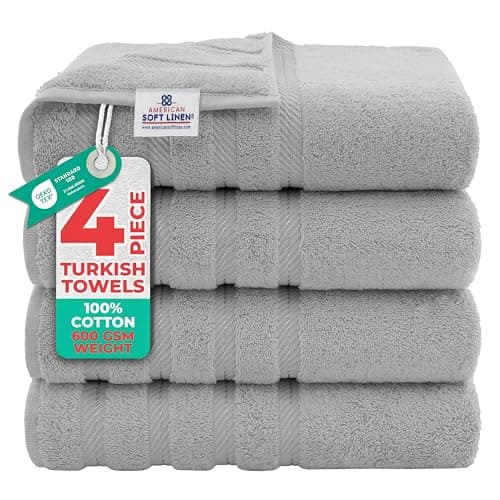
The everyday workhorse
American Soft Linen 600 GSM Turkish Cotton Bath Towel
A 600 GSM Turkish-cotton towel with double-stitched long edges, sitting in the weight band that stays absorbent without taking all day to dry.
#ad How we are funded · Price as of November 3, 2026
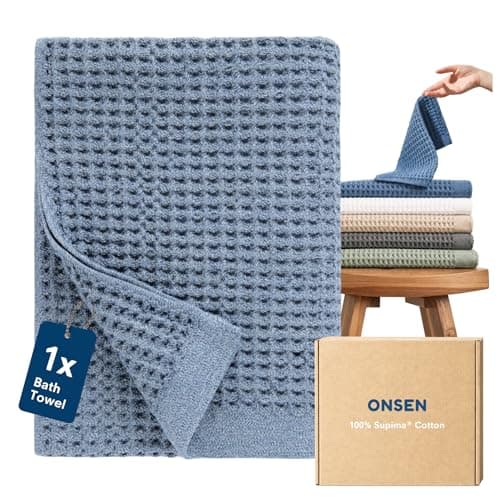
Fastest honest dry time
Onsen Supima Waffle Bath Towel
An open waffle weave in 100% USA-grown Supima cotton at roughly 410 GSM, built to dry in a fraction of the time a plush terry towel needs.
#ad How we are funded · Price as of November 3, 2026
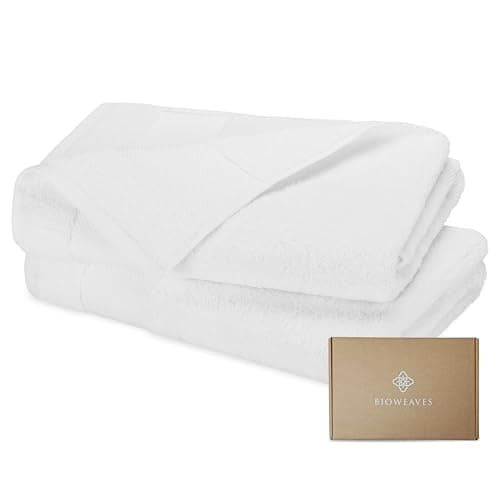
Organic certification with a published weight
BIOWEAVES Organic Cotton 700 GSM Bath Towels
GOTS-certified organic cotton at a stated 700 GSM in a two-ply low-twist yarn -- organic terry that tells you its density instead of asking you to take the certification on faith.
#ad How we are funded · Price as of November 3, 2026
What about two-ply and GSM-free listings?
Two-ply means the yarn is made of two strands twisted together before being woven. It is a genuine construction detail and generally a good sign -- a two-ply yarn is stronger and holds its shape through more washes than a single. BIOWEAVES states two-ply low-twist yarn alongside a published 700 GSM, which is the right way to talk about it: as one specification among several, not as the headline.
A listing with no GSM at all is a more interesting case, and not automatically a bad one. Several towels we recommend do not publish a weight -- Boll & Branch's ribbed towel is the clearest example -- because the brand is selling the fiber and the weave rather than the density. That is defensible when the fiber claim is specific (organic extra-long-staple Aegean cotton) and the weave is described. It is not defensible when the whole listing says is 100% cotton, super soft, highly absorbent.
The honest rule: a towel should publish at least two of weight, staple class and weave. One out of three is thin. Zero out of three, with a thread count in the headline, is a towel sold on a number borrowed from a different product.
Where thread count does still matter in a bathroom
It is not a useless measurement, it is a misapplied one. On anything flat-woven, thread count is doing real work: bath sheets in waffle or gauze, a flat-woven Turkish peshtemal, a cotton bath rug without a pile, a robe in a flat waffle weave.
In practice those products rarely quote it either -- peshtemal listings talk about weight in grams per towel and the weave, which is the better description. But if you see a thread count on a flat-woven item, it is at least measuring the fabric you touch. The peshtemal guide covers how flat-woven Turkish towels are actually specified.
The one-line version
If a towel listing gives you a thread count and no GSM, treat the thread count as the absence of a GSM. Nothing stops a brand publishing both, and the brands that build towels seriously publish the one that describes the pile.
Frequently asked questions
Do towels have a thread count?
Technically yes -- the backing cloth a terry towel is built on is a woven fabric and has one. Practically it tells you almost nothing, because a towel's performance comes from the pile looped up out of that backing, and thread count does not measure the pile.
What is a good thread count for towels?
There is no useful answer, which is the point. You can raise a towel's thread count by weaving the backing tighter without changing the pile at all, which improves the number and not the towel. Read GSM, staple class and weave instead.
Is GSM or thread count better for towels?
GSM, clearly. GSM measures grams of cotton per square meter including the pile, which is the part of the towel that absorbs water and touches you. Thread count measures the buried backing cloth. GSM is not a complete picture on its own either -- staple length and weave matter just as much -- but it is measuring the right part of the fabric.
Why do some towel brands advertise thread count?
Usually because they are bedding brands first. Thread count is the number their marketing already runs on, so it carries across to a towel line. It is a reasonable signal that the towel was specified by a sheeting team rather than a terry mill.
What does two-ply mean on a towel?
The yarn is two strands twisted together before weaving, which makes it stronger and better at holding its shape through repeated washing than a single-ply yarn. It is a real construction detail and a good sign, but only alongside a weight and a fiber claim -- not instead of them.
Should you avoid towels that do not publish a GSM?
Not automatically. Some good towels are sold on fiber and weave instead -- an organic extra-long-staple Aegean cotton towel in a described ribbed weave is a real specification. The rule worth applying is that a towel should publish at least two of weight, staple class and weave. One of three is thin; none of three is a guess.