Terry & Tub is reader-funded. Every buy button here goes to Amazon and earns us a commission at no extra cost to you. Brands we cannot earn from are reviewed anyway when they are the right answer, with a citation instead of a buy button. Full disclosure.
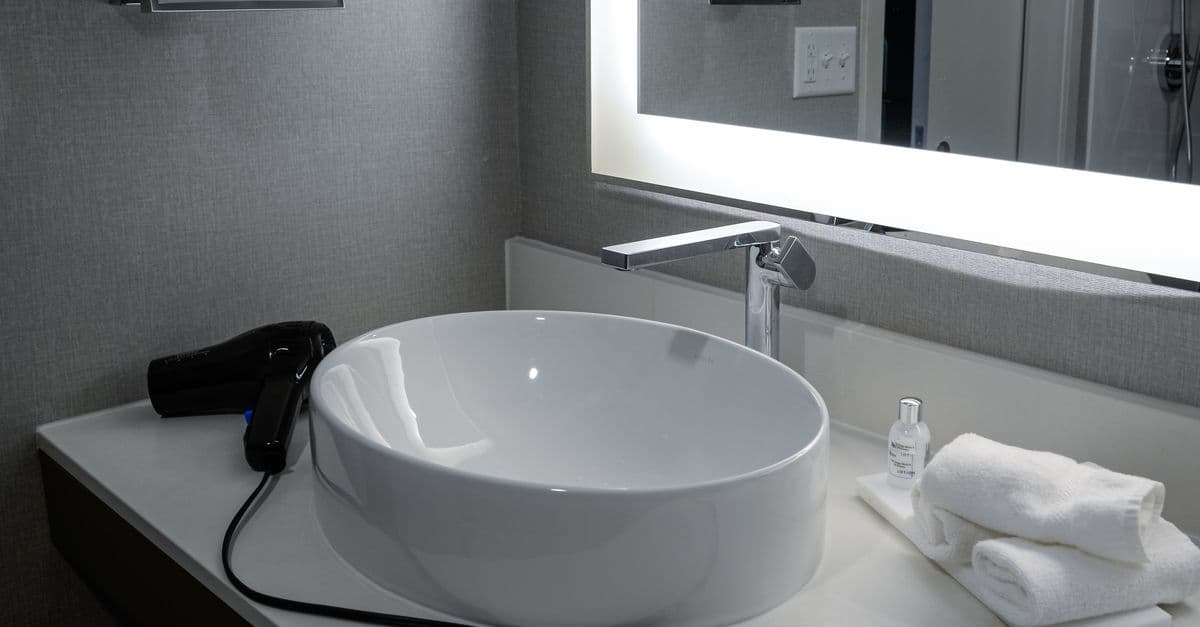
Hotel towels feel different because they sit in a narrower weight band than home towels -- usually 500-650 GSM of long-staple cotton -- and because they are washed hot in an alkaline wash, rinsed in softened water, oxygen-bleached rather than chlorine-bleached, and dried hard in an industrial tumbler. The towel is a small part of it; the laundry is most of it.
People describe the hotel towel feeling in three different ways and they are all the same thing. It feels crisper than a home towel. It absorbs faster. And it is dry again by the time you want it.
None of that comes from a secret towel. It comes from four decisions, and you can reproduce three of them.
Mechanism 1: the weight band
Hotels buy towels at 500-650 GSM. Home buyers, left to themselves, buy heavier -- 700, 800, sometimes 1000 GSM -- because in a shop a heavier towel feels more expensive.
A hotel cannot do that, because every towel has to be laundered and returned to service inside a few hours. So hotels sit in the band where a towel absorbs well and releases water fast. That band is also, not coincidentally, the band where a towel lasts longest at home. What each GSM band actually does.
Mechanism 2: the alkaline wash
Commercial laundries run an alkaline wash -- high pH, usually from sodium carbonate -- at 140F or above, then neutralize it in the rinse. Alkalinity is what lifts body oils and skin out of terry, and body oil is what makes a home towel feel slick and smell faintly after a few months.
You can copy this directly. Washing soda is sodium carbonate; a tablespoon or two in the wash alongside half your usual detergent dose does the same job on a domestic scale. The full method.
Mechanism 3: softened water and no fabric softener
Hotel laundries soften their water, which matters for two reasons. Hard water minerals bind to detergent so less of it does any cleaning, and the same minerals deposit in the fiber and make towels stiff.
What hotel laundries never use is fabric softener. It would destroy absorbency, and an unabsorbent towel generates complaints. The crispness people associate with hotel towels is partly the absence of the film that domestic softener leaves behind. What hard water does, and the fix.
Mechanism 4: the industrial dryer
This is the one you cannot fully copy. A commercial tumbler moves far more air at a higher temperature than a domestic dryer, and the towel comes out completely dry in a single pass with the pile standing up.
At home the nearest equivalent is a long spin in the washing machine followed by a medium-heat tumble that you stop while the towel is barely warm. The long spin is the part people skip and it is the part that matters most.
| Hotel laundry | Typical home wash | |
|---|---|---|
| Towel weight | 500-650 GSM | 700-900 GSM |
| Wash temperature | 140F and above | 86-104F |
| Alkalinity | Added, then neutralized | None added |
| Water | Softened | Whatever comes out of the tap |
| Bleach | Oxygen, per cycle | Occasional chlorine, or none |
| Softener | Never | Usually, every load |
| Drying | Industrial tumbler, one pass | Low airflow, often part-dried |
Why hotel towels smell the way they do
Two reasons, one of them unglamorous. The pleasant one is that the towel is genuinely, completely clean and completely dry -- most of what people read as a smell in a home towel is a trace of mildew and old body soil, and its absence reads as a scent of its own.
The other is that many hotel laundries finish with a light fragranced rinse additive, which is a cosmetic step and not part of the cleaning. If you want your towels to smell like a hotel, get them properly clean first -- a strip wash is usually the fastest route -- and then decide whether you want the fragrance at all. How to strip towels.
Why hotel towels turn yellow
Chlorine bleach and body oils, in that order. A laundry that uses chlorine bleach gets fast whitening and a cumulative yellow cast in the cotton, because chlorine reacts with cellulose over many cycles. Residual body oil oxidizes to yellow as well, particularly if the alkaline wash is being under-dosed to save money.
This is the one hotel-laundry habit worth not copying. Oxygen bleach whitens almost as fast, does not yellow cotton and does not weaken the hems. Oxygen versus chlorine, in full.
The towels and the one product
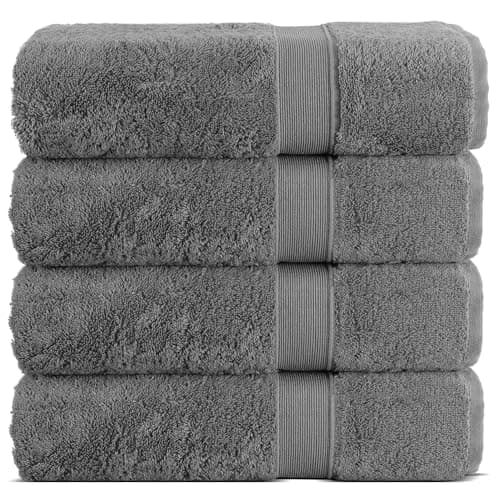
Chakir Turkish Linens Hotel & Spa is the literal answer to the question: 550-600 GSM of long-staple Turkish cotton built to the hotel-and-spa specification, OEKO-TEX certified. This is the towel the trade buys, and it is crisp rather than plush because that is what the weight band gives you.
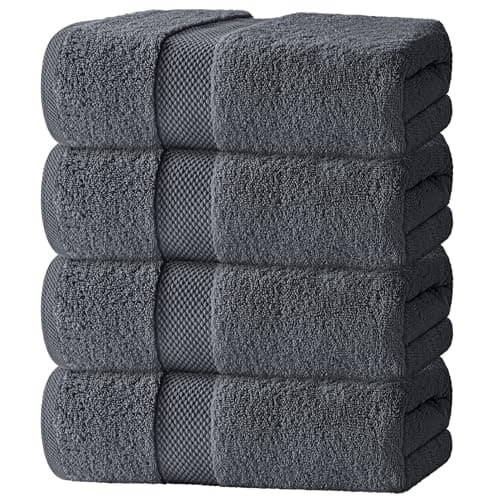
White Classic 700 GSM is for people who want the plush version of the hotel feeling: long-staple combed cotton with double-needle stitched edges, at the top of the practical weight range. It needs a rail and some airflow, and in a bathroom with no window the Chakir is the better towel.
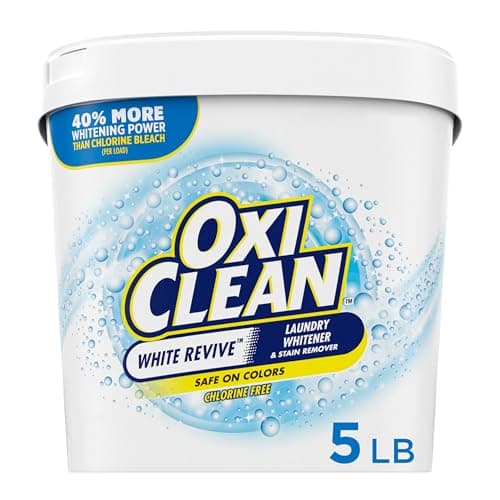
OxiClean White Revive is the chemistry: sodium-percarbonate oxygen bleach, used as a monthly hot soak. This is the part of the hotel formula that is genuinely transferable and most people are not doing.
The towel hotels actually buy, the plush alternative for a well-ventilated bathroom, and the oxygen bleach that does what a commercial laundry's bleach step does.
Hotel feel at a hotel-supply price
Chakir Turkish Linens Hotel & Spa Bath Towel
A 550-600 GSM long-staple Turkish cotton towel built to the hotel-and-spa spec, which is exactly the crisp, medium-weight towel most people are actually trying to buy.
The plush end, honestly labeled
White Classic Luxury 700 GSM Bath Towels
700 GSM long-staple combed cotton -- a genuinely dense, spa-weight towel, with the dry time that necessarily comes with it.
#ad How we are funded · Price as of November 3, 2026
Keeping white towels white
OxiClean White Revive Laundry Whitener
An oxygen-bleach whitener the brand claims whitens 40% better per load than chlorine bleach -- and, unlike chlorine, it does not attack the cotton.
#ad How we are funded · Price as of November 3, 2026
If you want the ranked version of this, the hotel-quality towel roundup goes through five.
Are hotel towels actually clean?
At a properly run hotel, cleaner than yours. A 140F alkaline wash with oxygen bleach every cycle is a more rigorous process than a 104F domestic wash with a full detergent dose and no bleach, and the towels come out completely dry rather than part-dried.
The failure mode in hotels is not cleanliness, it is the towel's lifespan: a hotel towel goes through hundreds of those cycles in a couple of years, which is why hotel towels are retired on feel rather than on appearance. At home, the same chemistry on one-fifth of the cycles gives you a towel that stays hotel-crisp for years. How often you actually need to replace towels.
The same engineering shows up in a detail you can see from across the room -- the wide flat band woven near each end of a hotel towel. What that stripe is for is the short version of why hotel towels keep their shape through a laundry cycle that would finish a retail towel.
Frequently asked questions
Why do hotel towels feel different?
Because they sit at 500-650 GSM rather than 800, and because they are washed hot in an alkaline wash, rinsed in softened water, oxygen-bleached every cycle, never softened, and dried completely in an industrial tumbler. The laundry accounts for more of the difference than the towel does.
Why do hotel towels dry so well?
Two reasons. They are lighter than most home towels, so there is less cotton holding less water. And they carry no fabric softener film, so the fiber absorbs and releases water the way bare cotton does.
Why do hotel towels smell so good?
Mostly because they are genuinely completely clean and completely dry, and the absence of trace mildew and old body soil reads as a scent of its own. Some laundries also add a light fragranced rinse, which is cosmetic rather than part of the cleaning.
Why do hotel towels turn yellow?
Chlorine bleach reacting with cotton over hundreds of cycles, plus residual body oil oxidizing when the alkaline wash is under-dosed. It is the one hotel-laundry habit not worth copying -- oxygen bleach whitens without the yellowing.
Can you make your towels feel like hotel towels?
Largely, yes. Buy at 550-650 GSM, halve your detergent and add a tablespoon of washing soda, drop fabric softener entirely, oxygen-bleach whites monthly at 140F, use the longest spin and dry fully. The only part you cannot reproduce is the industrial dryer.
What GSM are hotel towels?
Typically 500-650 GSM. Hotels need a towel that can be laundered and returned to service within hours, which rules out the 800 GSM-plus towels that feel most impressive in a shop.
Do hotels use fabric softener on towels?
No. Softener leaves a water-repellent film on the fiber, and a towel that does not absorb generates complaints. The crispness people associate with hotel towels is partly the absence of that film.