Terry & Tub is reader-funded. We earn a commission on some links to Amazon at no extra cost to you, and we mark those links. Products we cannot earn from are included anyway when they are the right answer, and labeled as such. Full disclosure.
Turkish towels are worth it if your bathroom is small or humid, if storage is tight, or if you travel. They are not worth it if you want to wrap up in something plush, have long hair and only want one towel, or will not tolerate three washes before it works.
This question gets asked a lot and almost never answered honestly, because the pages answering it are mostly selling Turkish towels. Here is the version that assumes you might not buy one.
They are worth it if...
- Your bathroom is small, windowless or shared. A peshtemal is dry in an hour or two. Terry in the same room stays damp, and damp towels are the ones that smell. This is the strongest argument in the category.
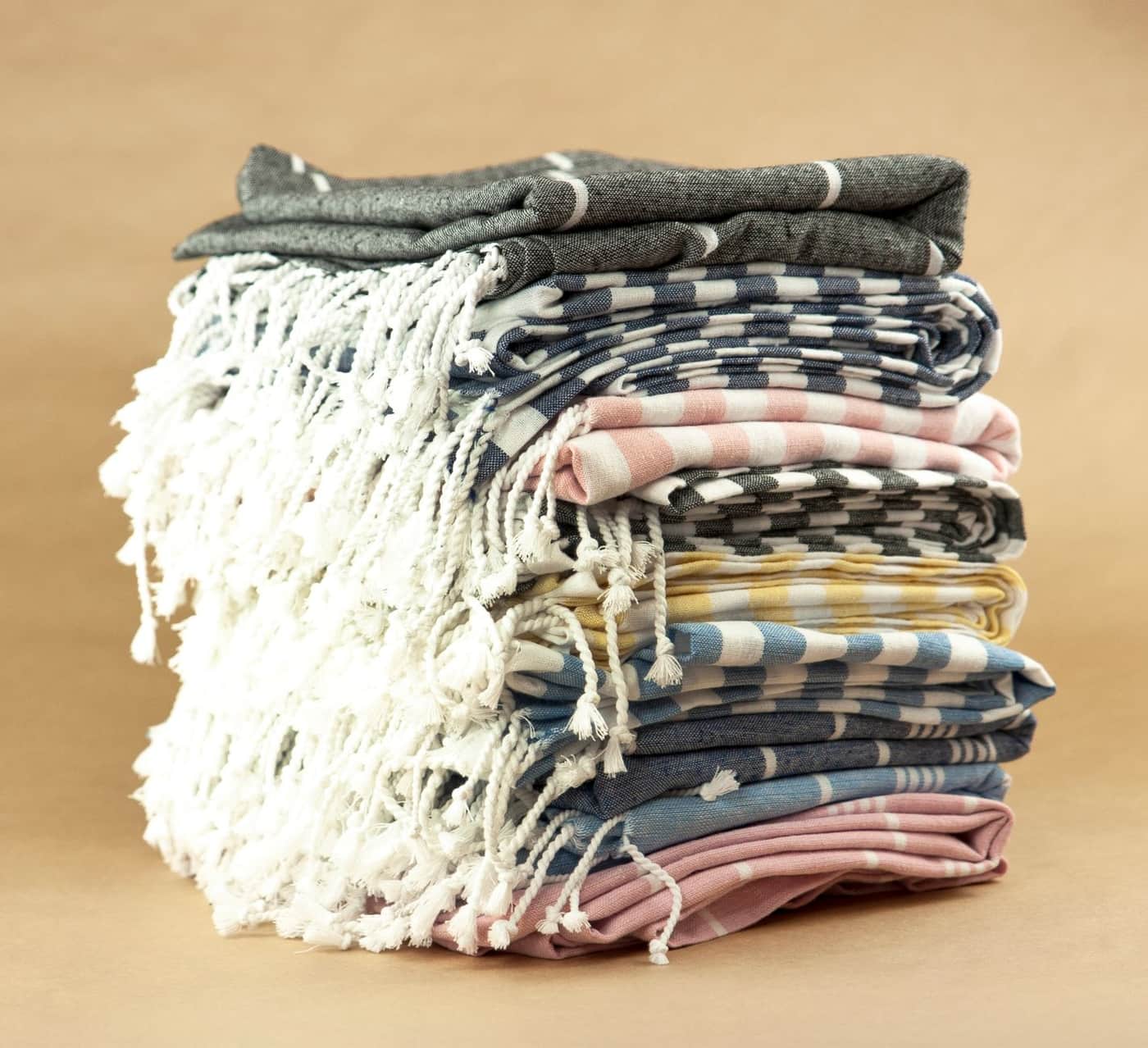
- Storage is tight. One shelf holds roughly three times as many peshtemals as terry towels.
- You travel, swim, or use a gym. It packs flat, weighs a few hundred grams and does not sour in a bag.
- You want to buy towels once. With no pile to crush and very little structure to fail, peshtemals routinely outlast terry towels bought at the same time.
- You have hard water. Hard water stiffens a terry pile badly; a flat weave has far less to stiffen. More on hard water and towels.
They are not worth it if...
- You want to be enveloped. A peshtemal will never feel plush. If a towel is a small daily luxury for you, this is the wrong product and no amount of washing changes that.
- You have long hair and want one towel. It will not hold wet hair. You will end up using two, which undoes the storage argument.
- You will judge it in week one. A new peshtemal is stiff and barely absorbent. Three warm washes fixes it. Most negative reviews are written before that happens.
- You want the tassels to be low-maintenance. They tangle, they catch on zips, they need the occasional trim. Small, but it is the honest downside.
Are they really more absorbent? No.
This is the most common claim made for Turkish towels and it is not true as usually stated. A flat weave has a fraction of the surface area of a looped terry pile, and surface area is what absorbs water. A peshtemal holds less water than terry, full stop.
What is true is that a peshtemal dries you effectively despite holding less, because you use it differently -- wiping rather than patting -- and because it never reaches saturation in normal use the way a thin cheap terry towel does. It is also more absorbent than an equally thin terry towel, which is probably where the claim started.
What the first three weeks are actually like
Week one: stiff, slightly waxy, water beads off it. This is genuinely alarming if you have just spent money and nobody warned you.
Week two, after two warm washes: noticeably softer, absorbency arriving. The cotton waxes and manufacturing sizing agents have mostly gone.
Week three onwards: it works. And then, unusually, it keeps getting better for years. The washing guide covers how to speed the break-in up -- and a prewashed peshtemal skips most of it.
The cost case
Peshtemals are not expensive. A good 100% cotton one costs about what a mid-range terry towel costs, and a six-pack costs roughly what two good terry towels do. Given that they tend to last longer, the per-year cost is usually lower.
The cheap way to find out whether they suit you is to buy exactly one, wash it three times, and use it for a fortnight while keeping your terry towels on the rail. That is a small, reversible experiment, and it answers the question better than any article can.
The hedge, if you want one
A terry-backed peshtemal like Bersuse's Lagos gives you a flat-woven face and a looped terry reverse. It is heavier and slower to dry than a pure flat weave, but it removes the absorbency objection entirely and it still packs smaller than terry. If you are nervous, start there rather than not starting at all.
Frequently asked questions
Are Turkish towels more absorbent than regular towels?
No. A flat weave holds less water than a looped terry pile. It dries you effectively because you use it differently, and because it never saturates the way a thin terry towel does.
How long do Turkish towels take to break in?
Two or three warm washes. Buying a prewashed peshtemal skips most of the break-in period.
Are Turkish towels good for long hair?
Not especially. They do not hold wet hair the way terry does. Most people who switch keep one terry towel for hair.
Do Turkish towels smell?
Far less often than terry, because they dry in an hour or two and bacteria never get established. That is the strongest practical reason to own them.
How much do good Turkish towels cost?
About the same as a mid-range terry towel individually, and a six-pack costs roughly what two good terry towels do. Per year of service they usually work out cheaper.